An Outline of Chinese History
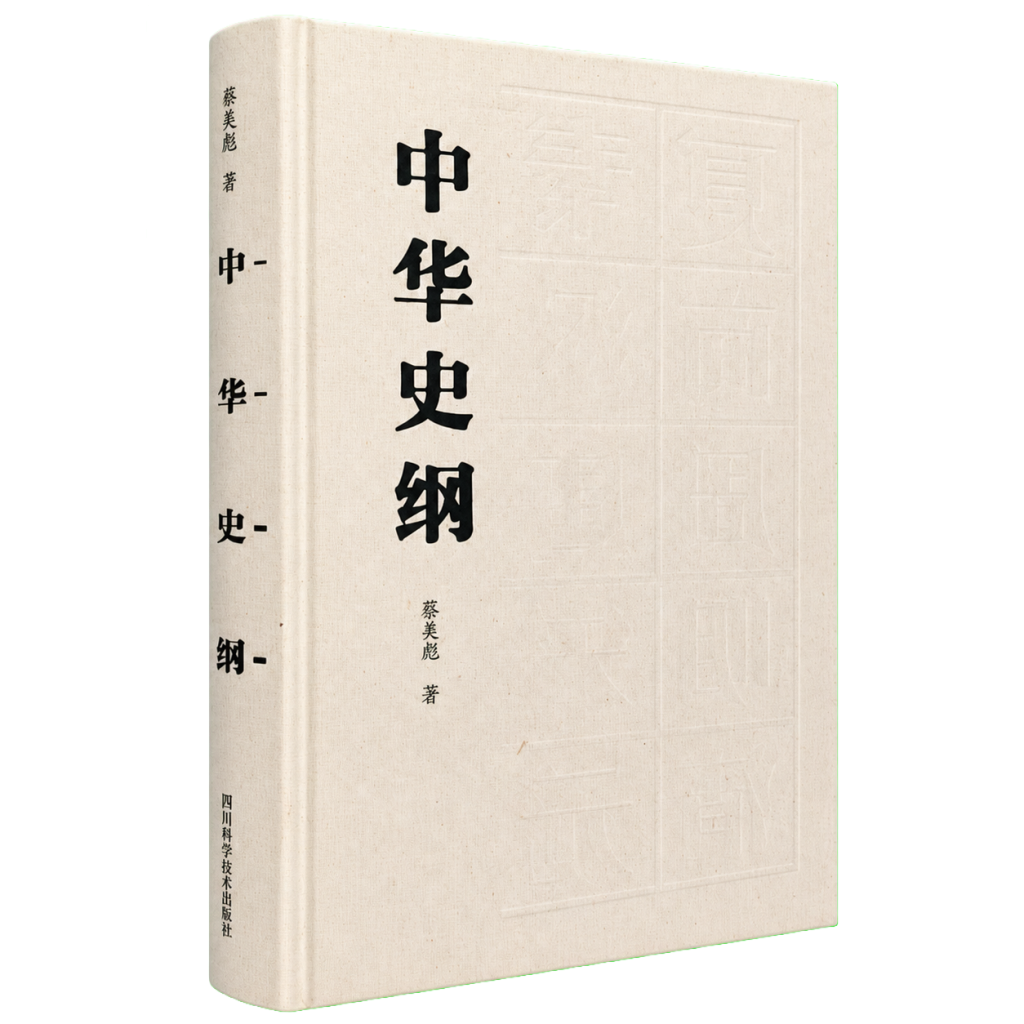
An Outline of Chinese History is a masterful condensation of the monumental twelve-volume General History of China, originally published by People’s Publishing House. The author, Cai Meibiao — honorary member of the Chinese Academy of Social Sciences and researcher at the Institute of Modern History — took on the task of creating this simplified edition at the request of central leaders who believed that the comprehensive multivolume work should be made accessible to the general public. The original General History of China is widely regarded as the most complete and systematic history of China produced in the past century. Its first four volumes were written by the renowned historian Fan Wenlan, and after Fan’s passing, Cai Meibiao presided over the completion of the remaining volumes. In this condensed version, Cai uses just 300,000 Chinese characters to outline the historical arc from primitive society to the fall of the Qing Dynasty. The result is a work that is detailed where it matters, concise in language, and truly reflective of a master historian’s craft — a rare, high level historical work intended for non specialist readers.
The book follows a strict general history format, covering every major dynasty — from the Qin, Han, Tang, Song, Yuan, Ming, and Qing, to the Wei, Jin, Southern and Northern Dynasties, and the Five Dynasties and Ten Kingdoms. Despite its brevity, it encapsulates five thousand years of Chinese history. Readers will learn, for example, when China implemented the provincial system and under what historical conditions Xinjiang and Taiwan were established as provinces. The book’s thematic focus is equally clear: it traces China’s transition from slavery to feudalism, the origins of imperial rule, the rise and fall of dynasties, and the lessons of state governance. Key concepts — such as the power usurpation by royal relatives, eunuchs misleading the state, “holding the emperor to command the princes,” the nine rank system, the clan system, and the imperial examination system — are all explained in detail. The book also highlights glorious eras: the Zhenguan reign of the Tang Dynasty, the technological inventions of the Song, Zheng He’s seven voyages to the West during the Ming Yongle period, and the Kangxi Qianlong prosperity of the Qing. At the same time, it does not shy away from describing periods of chaos, peasant uprisings, and the late Qing’s failure to respond to Western capitalist powers, which led to China becoming a semi colonial, semi feudal society.
A particular strength of this book is its attention to the formation of China as a multi ethnic unified country with the Han nationality as the main body. Cai Meibiao provides insightful analysis — for example, how the northern regimes during the Wei and Jin dynasties, though established by various ethnic groups, adopted the ancient Han state names to claim the cultural heritage of the Central Plains, thereby facilitating ethnic integration. By reading this book, audiences gain a clear understanding of how China’s multi ethnic unity evolved, including the roots of later ethnic autonomy policies. Furthermore, the book guides readers to appreciate the deep historical accumulation behind today’s China, fostering a sense of awe for history and respect for the ancestors who propelled progress. It is not only a historical overview but also an education in patriotism and a resource for those thinking about China’s development path, harmonious society, and socialist core values.