

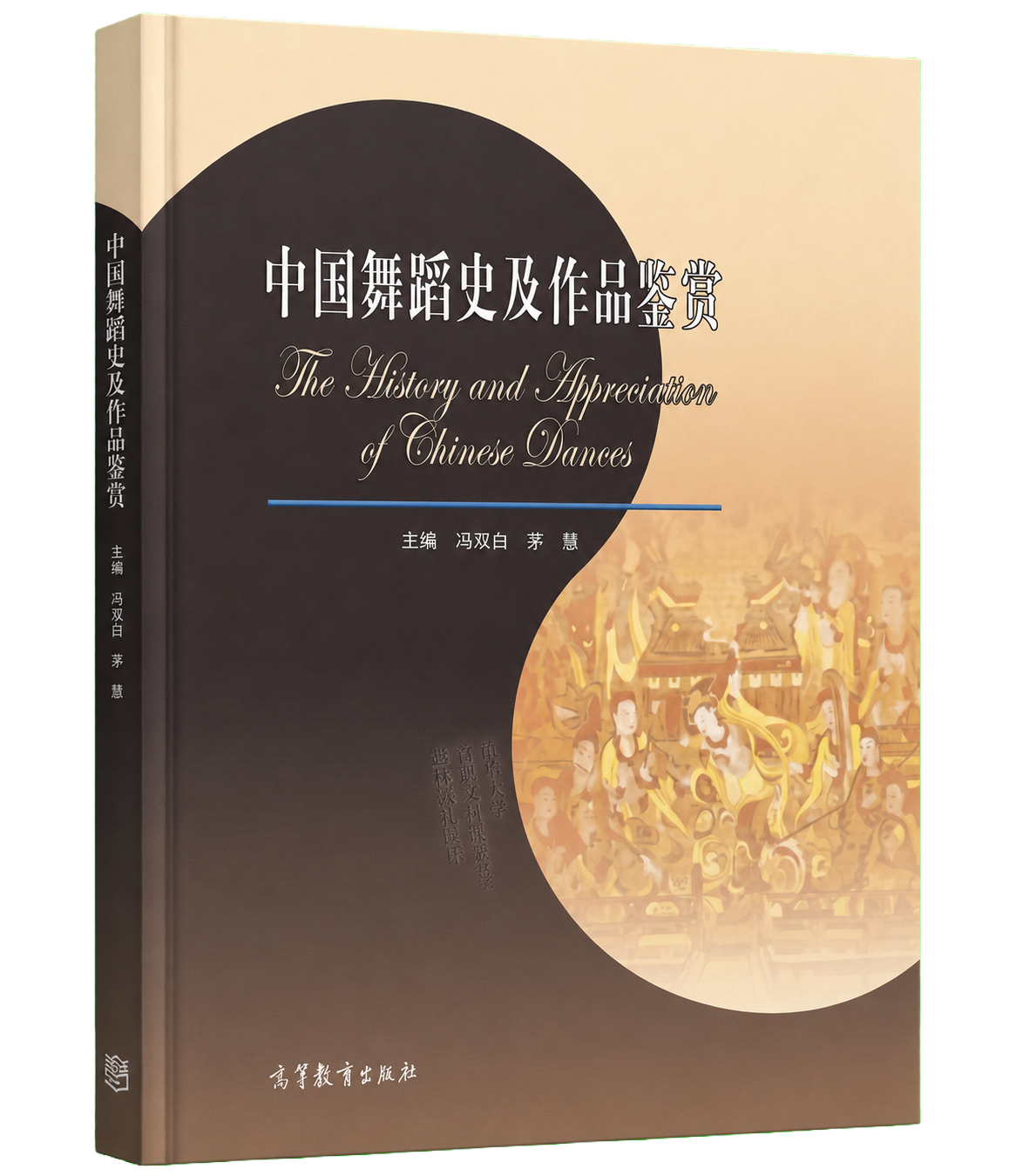
The History and Appreciation of Chinese Dances is a comprehensive textbook on the general history of Chinese dance, designed specifically for university students and graduate majors in dance. The book is organized into fourteen chapters. Each chapter begins with a thorough exposition of historical theories and knowledge, followed by a dedicated “Appreciation of Works” section. These sections provide brief critical reviews of contemporary dance works that relate to the historical content of the chapter, effectively bridging the gap between ancient dance history and modern dance practice while stimulating the reader’s imagination. At the end of each chapter, “Thought and Exercise” questions help instructors highlight key points and assist students in mastering the most important and challenging material.
To emphasize the professional character of dance as an art form, the book includes over three hundred carefully selected dance images, making the content more vivid and intuitive. Covering dance from ancient times through successive dynasties to the present day, the text respects established academic conclusions while appropriately incorporating new theoretical insights. For example, the book delves into the dance traditions of the Yellow Emperor’s tribal confederation, including the famous Cloud Gate Great Scroll (Yunmen Dajuan), also known as Cheng Yun or Xianchi. This dance was the first piece in the “Six Dances” of the early Zhou dynasty, created to praise the Yellow Emperor’s achievements — his creation of all things, uniting of the people, and virtue as abundant as clouds. The book traces the origins of such dances as totemic rituals, drawing on legends from classical texts such as Zhuangzi and Han Feizi, and even links them to later military music and the Chiyou Dance (a horned dance still reflected in the silver bull horn ornaments of Miao women today). Archaeological materials — pottery and rock paintings — are also examined, with appreciations of notable works such as the Dance Pattern Painted Pottery Basin, the Huashan Rock Paintings in Guangxi, and the grand musical Luoyue Shenyun.
This textbook is an indispensable resource for students, teachers, and researchers of Chinese dance, as well as for anyone interested in the intersection of performing arts, archaeology, and ancient Chinese culture. By connecting legendary origins, ritual practices, and contemporary choreography, The History and Appreciation of Chinese Dances offers a holistic and deeply engaging journey through China’s rich and continuous dance heritage.
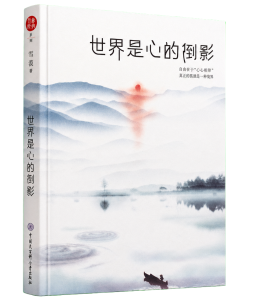
In an age of relentless anxiety and spiritual disorientation, this book arrives as a much-needed dialogue between classical Chinese wisdom and the restless modern soul. Xue Mo, a celebrated Chinese writer and a practitioner of Tibetan Buddhist Mahamudra tradition, presents a series of profound yet accessible reflections on how our inner world shapes the reality we experience. Rather than offering temporary comfort or abstract theories, The World Is a Reflection of the Mind cuts through illusions and directly touches the reader's true heart. It reveals a liberating truth: none of the problems we encounter originate from others — they are rooted in our own minds. By changing the mind, we can change our actions, and by changing our actions, we can transform our very destiny.
The book can be viewed as a series of "yoga lessons for the mind" — practical, wisdom-based exercises for handling all sorts of life situations. Through simple, unpretentious language and vivid anecdotes drawn from years of observing life and cultivating inner awareness, Xue Mo guides readers toward self-mastery. He teaches that the world appearing before our eyes is nothing but a reflection of our own mind. To see this clearly is to become a master player in the game of existence; to master one's own mind is to become the sovereign of one's inner world. The book's power lies in its ability to reach beyond intellectual understanding and initiate genuine inner transformation. It is neither a "chicken soup for the soul" nor a volume of theoretical jargon, but a vital handbook for authentic spiritual cultivation.
This landmark edition presents the original Chinese text alongside a masterful English translation by J. C. Cleary, a renowned American sinologist and Harvard-educated translator of classics such as The Art of War and The Flower Adornment Sutra. The bilingual format allows readers to appreciate the beauty of Xue Mo's original prose while benefiting from Cleary's precise and elegant rendering. First published in English in 2018 by Encyclopedia of China Publishing House, and now issued in a bilingual edition by Zhonghua International Media Publishing Group, the book has received international acclaim. Readers in fields as diverse as medicine and education have found in it a source of profound insight and practical guidance. For anyone seeking deeper meaning, inner peace, and a clearer understanding of the relationship between mind and world, The World Is a Reflection of the Mind is an indispensable companion.
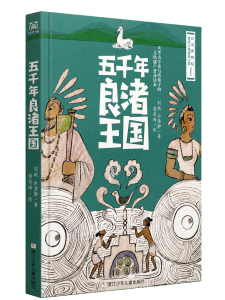
This remarkable book takes young readers on a vivid journey back 5,000 years to the ancient Kingdom of Liangzhu, a civilization that represents the dawn of Chinese culture. Written by renowned archaeologist Liu Bin, the lead discoverer of the Liangzhu archaeological site, this beautifully illustrated children’s book unlocks the mysteries of a UNESCO World Heritage site. Through a unique focus on three core elements—water, city, and jade—it reveals the everyday life, remarkable engineering, and spiritual world of the Liangzhu people, from the world’s earliest known dam system to China’s unique “Jade Age.”
Co-authored by Liu Bin, a leading archaeologist and director of the Zhejiang Provincial Institute of Cultural Relics and Archaeology, and Yu Jingjing, a former Xinhua News Agency journalist with extensive experience covering major archaeological discoveries, this book bridges the gap between rigorous scholarship and engaging storytelling. It is an authoritative yet wonderfully accessible introduction to one of the world's oldest civilizations, brought to life with stunning illustrations by Zeng Qiqi that blend traditional Chinese ink painting with modern animation.
In July 2019, the Archaeological Ruins of Liangzhu City were inscribed on the UNESCO World Heritage List as testimony to the existence of a Chinese civilization at least 5,000 years ago. This book captures that significance for a young audience, helping them understand not just the facts of the past, but the wonder of discovery. It is a perfect resource for parents and educators seeking to inspire curiosity about history, archaeology, and the rich tapestry of China's cultural heritage.
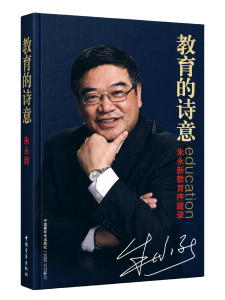
Zhu Yongxin is one of China's most influential education thinkers. As the founder of the "New Education Experiment" movement — which has been adopted by over 1,500 schools across China — he has dedicated his life to restoring the richness and completeness of human nature through schooling. A distinguished professor at Soochow University, a former deputy mayor of Suzhou, and the current Vice Chairman of the 14th National Committee of the Chinese People's Political Consultative Conference (CPPCC), Zhu Yongxin is also a prolific writer whose works have been translated into more than 28 languages, including English, Japanese, and Korean. This bilingual edition, Chasing Dreams, offers English-speaking readers an intimate and inspiring window into the heart of Zhu's educational philosophy.
What makes this collection unique is its format. The book gathers over one hundred prefaces and postscripts written by Zhu Yongxin for other authors — friends, students, and fellow educators — over several decades. These are not detached academic essays; rather, they are spontaneous, heartfelt texts often written at the request of a friend or publisher, or simply because Zhu was deeply moved by someone's work or character. Within these short pieces, the reader discovers a wide array of themes: the importance of children's literature, the artistry of teaching, the power of reading, and the urgent need to reform China's examination system. Each preface or postscript is a gem of warmth, sincerity, and intellectual clarity.
A central thread running through the collection is Zhu's core belief that the purpose of education is to help both teachers and students lead "a happy and complete life". In an age where education is increasingly reduced to test scores, competition, and economic utility, this book is a powerful reminder of education's deeper, more human dimension. The Poetics of Education is essential reading for anyone — educators, policymakers, parents, and students alike — who seeks to understand the soul of modern educational reform in China and the vision of one of its most passionate and influential advocates.
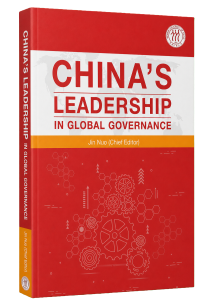
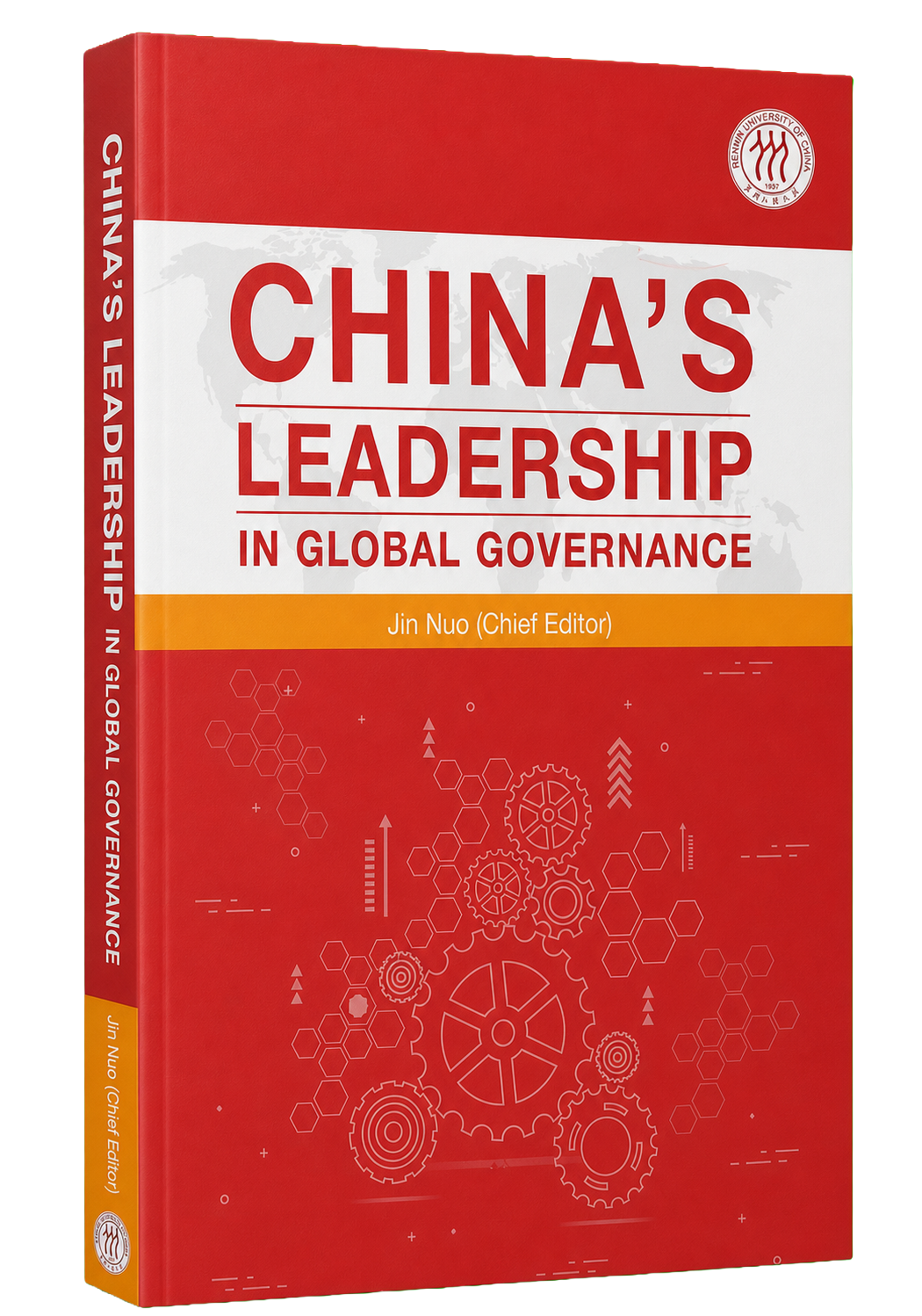
“The world is so big, and the problems are so many. The international community expects to hear China’s voice and see China’s solutions. China cannot be absent.” This powerful statement opens a groundbreaking work that systematically examines China’s growing role in global governance. Edited by Professor Jin Nuo, Party Secretary of Renmin University of China, the book brings together more than ten distinguished experts from the fields of international relations, economics, law, and political science — including renowned scholars such as Pang Zhongying, Jin Canrong, Yang Guangbin, Chen Yue, and Wang Yiwei. Together, they provide a comprehensive and authoritative analysis of why China’s participation in global governance is not only necessary but indispensable.
The book is divided into two complementary parts. The first half lays the theoretical groundwork: it explores the logical starting points of global governance, analyzes what the world expects from China, examines the domestic foundations that enable China to act, and clarifies China’s evolving role on the global stage. The second half shifts from theory to practice, focusing on China’s concrete explorations in global governance. It delves into China’s sentiments, philosophical underpinnings, major propositions, key initiatives, specific plans, and practical attempts to address transnational challenges — from climate change and economic inequality to peacekeeping and pandemic response. The authors offer a panoramic assessment of current developments and future prospects, answering clearly and forcefully the central question: “Why can China not be absent from global governance?”
Written with academic rigor yet accessible to a broad audience, China’s Leadership in Global Governance provides both a theoretical framework and a practical roadmap for understanding China’s responsible role in shaping a more just and effective international order. It is an essential read for policymakers, scholars, students of international affairs, and anyone interested in the future of global cooperation and the rise of China as a key global actor.
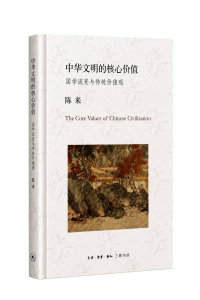
Drawing on the core values of Western civilization as a comparative lens, this book identifies and refines the corresponding core principles within Chinese civilization. The author distills them into four fundamental tenets: duty before freedom, obedience before rights, community before the individual, and harmony before conflict. Rooted in a deep engagement with guoxue — traditional Chinese Sinology — the work provides a detailed explanation of China’s classical value system, offering readers a structured understanding of how these principles have shaped Chinese thought and society across centuries.
While modern scholars have extensively discussed the concept of guoxue, their efforts have largely focused on compiling and cataloging an extremely rich and diverse body of information. Missing, however, has been a systematic theoretical analysis of the concepts and theories underlying guoxue. This book fills that gap by developing a rigorous theoretical framework in three important respects. First, it analyzes the mindset of guoxue, examining the dominant ideas and values of the historical period in which the term emerged. Particular attention is paid to the connection between guoxue and early social and cultural transformations, distinguishing three key phases of its development. Unlike past scholars who primarily defined guoxue by its range of studied objects, this book emphasizes guoxue as a modern body of research with its own evolving logic.
Second, the book assesses several phases in the modern evolution of guoxue research, tracing its journey from the beginning to the end of the twentieth century — culminating in the later phase of the National Heritage movement. Third, it explores the various main modes of modern guoxue, demonstrating how these modes correspond step by step with the evolutionary phases of guoxue research. By providing both historical depth and theoretical clarity, The Core Values of Chinese Civilization offers an essential resource for anyone seeking to understand the philosophical and cultural foundations of contemporary Chinese civilization.
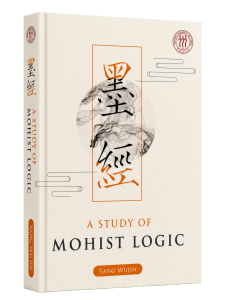
This landmark work by Professor Yang Wujin of Renmin University of China provides a definitive, systematic study of Mohist logic — one of the three major sources of ancient logic worldwide, alongside Aristotelian logic and Indian Hetu-vidya (In logic). For over a century, the existence and legitimacy of a native Chinese logical tradition have been fiercely debated. Professor Yang, a leading philosopher and distinguished logician, confronts this debate head on. He meticulously examines the historical and cultural origins of Mohist logic, fully affirming the foundational classical texts and their philosophical interpretations. This book refutes the once prevalent view that China had no logical tradition, demonstrating instead that the Mohist school, founded by the philosopher Mozi in the 5th century BCE, developed a sophisticated and highly relevant system of reasoning rooted in the very essence of language and argumentation.
Professor Yang achieves this through a brilliant two tiered analysis. At the object-language level, he reveals Mohist logic as a form of “argumentation logic,” which closely resembles the non formal logic and critical thinking now highly valued in the West. At the meta theoretical level, he uncovers its underlying theories and principles of formal logic, using modern logical tools to unlock its timeless wisdom. The book shows how Mohist logicians systematically studied concepts, propositions, inference patterns, and paradoxes — long before similar work emerged elsewhere. By bridging ancient Chinese thought with contemporary logical frameworks, Yang Wujin demonstrates not only the legitimacy but also the profound modernity of Mohist logic. Praised by scholars for its fresh linguistic perspective, this volume is an essential resource for anyone interested in comparative philosophy, the history of logic, and the rich intellectual heritage of pre Qin China.
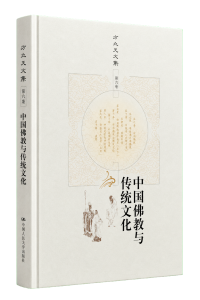
Since the first century CE, when Buddhism entered China from India, this foreign religion has both influenced and been influenced by traditional Chinese culture, eventually becoming an integral part of it. This profound historical process is not only a major theme for China but for all of East Asia. In Chinese Buddhism and Traditional Culture, Professor Litian Fang offers a systematic exploration of Buddhism as a cultural entity, examining its classics, doctrines, monastic system, and rituals. By tracing the religion’s development chronologically — from its introduction during the Han Dynasties (202 BCE–220 CE), through its flourishing in the Sixteen Kingdoms (c. 304–439 CE), to its gradual decline since the Five Dynasties (907–c. 960 CE) — the book provides a clear and comprehensive overview of Buddhism’s long journey on Chinese soil.
A key contribution of this work is its detailed analysis of how Buddhism became sinicized. The author highlights the crucial roles played by Buddhist schools of the Southern and Northern Dynasties (420–589 CE) and the Buddhist sects of the Sui and Tang Dynasties (581–907 CE) in this transformative process. Moreover, the book addresses the fascinating question of similarities and differences between Chinese Buddhism and its Indian counterpart. By comparing the two, Professor Fang illuminates the specific characteristics of Chinese Buddhist thought and culture — how indigenous Confucian and Daoist ideas reshaped Buddhist doctrines, and how, in turn, Buddhism enriched China’s philosophical and cultural landscape. The final chapter extends the discussion beyond China, examining the external influence of Chinese Buddhism across East Asia, including in Korea, Japan, and Vietnam.
This volume is an essential resource for scholars and students of Buddhism and Chinese cultural studies, particularly those in Buddhist countries. It will also appeal to any reader interested in religion, Chinese culture, and ancient Chinese history. Written with academic rigor yet accessible in style, Chinese Buddhism and Traditional Culture offers both a gateway for newcomers and deep insights for specialists, demonstrating how a foreign faith became a pillar of one of the world’s oldest continuous civilizations.