IRAN Against Demonization
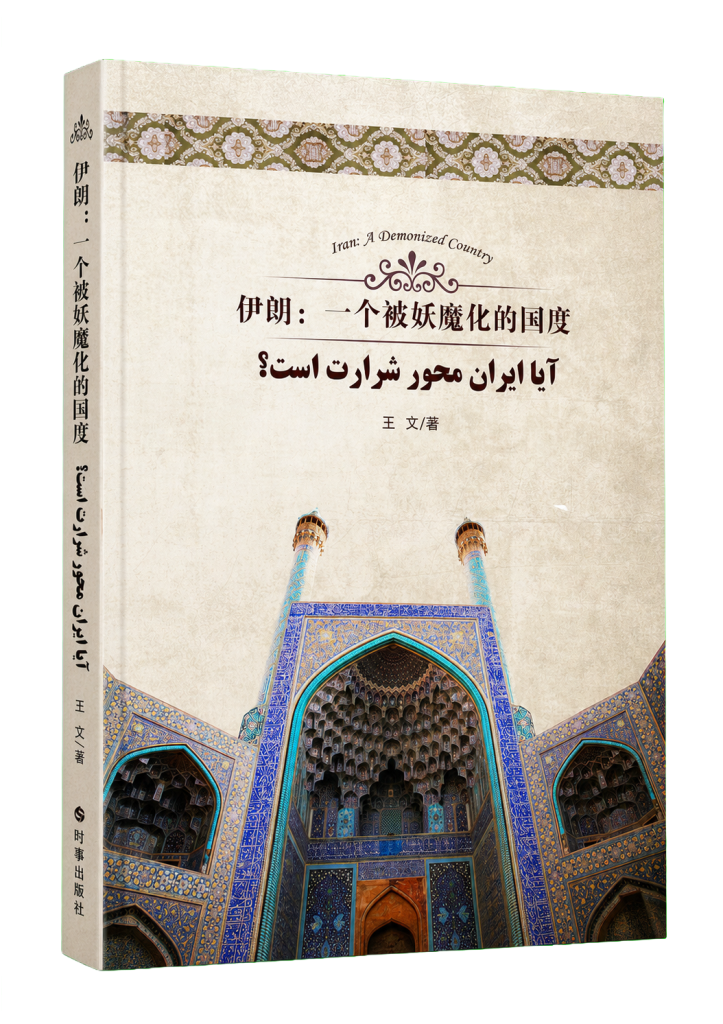
In this remarkable travelogue cum political analysis, Wang Wen — Executive Dean of the Chongyang Institute for Financial Studies at Renmin University of China — takes the reader on an intimate journey into the heart of contemporary Iran. Written in the wake of the 2012 “Arab Spring” and escalating Western sanctions, the book challenges the one dimensional, often hostile portrayal of Iran in mainstream Western media. Wang, a distinguished Chinese scholar and former editor of the Global Times, draws on his firsthand observations during a visit to Tehran and Isfahan. He asks a simple yet provocative question: Is Iran truly the “axis of evil” as depicted by Washington, or is it a complex, proud, and deeply dignified nation that has been systematically demonized?
The book unfolds as a series of twelve vivid essays, each peeling back a layer of misconception. Wang begins with his own introspections on the flight to Tehran, confessing his initial nervousness — a reflection of how even educated Chinese have internalized Western narratives about Iran’s “dangerousness.” But upon arrival, he encounters a startlingly different reality: fashionable, friendly women who happily pose for photos; a society that is simultaneously devout and “quietly passionate”; a political system where President Ahmadinejad stands unprotected before millions, far more accessible than any Western leader. Wang explores the paradox of Iranian life — the chador covering colorful attire, the absence of nightclubs yet the presence of romance on every corner — and concludes that Iran is neither a terrorist haven nor a chaotic failed state, but a nation where “dignity” trumps material comfort.
What makes this book particularly valuable is Wang’s insistence on providing three alternative perspectives: the Iranian view of itself as a free, democratic, and dignified Islamic power; the global view of Iran as an emerging “axial civilization” resisting Western hegemony; and the Chinese strategic view of Iran as an indispensable energy partner and geopolitical counterweight. Wang argues that Iran serves as a “concave and convex mirror” for China — reflecting both China’s achievements and its own compromises. Written with the fluency of a journalist and the rigor of a policy analyst, Iran: A Demonized Country is essential reading for anyone seeking to understand the real Iran beyond the headlines, and for those who wish to reflect on how global power narratives shape our perceptions of entire nations.