
Chinese Buddhism and Traditional Culture
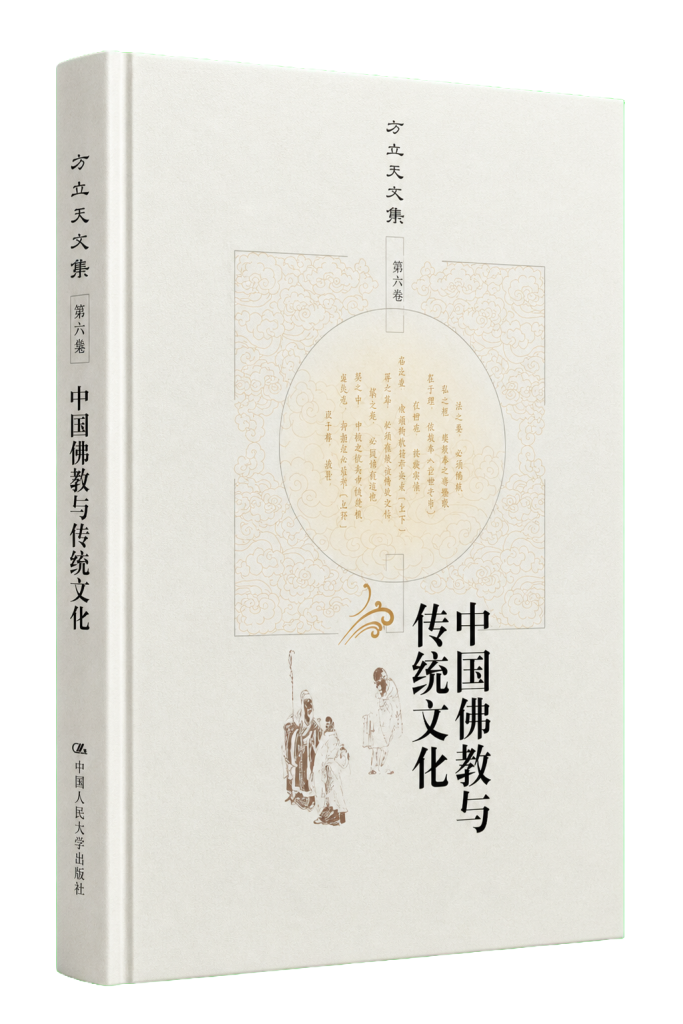
Since the first century CE, when Buddhism entered China from India, this foreign religion has both influenced and been influenced by traditional Chinese culture, eventually becoming an integral part of it. This profound historical process is not only a major theme for China but for all of East Asia. In Chinese Buddhism and Traditional Culture, Professor Litian Fang offers a systematic exploration of Buddhism as a cultural entity, examining its classics, doctrines, monastic system, and rituals. By tracing the religion’s development chronologically — from its introduction during the Han Dynasties (202 BCE–220 CE), through its flourishing in the Sixteen Kingdoms (c. 304–439 CE), to its gradual decline since the Five Dynasties (907–c. 960 CE) — the book provides a clear and comprehensive overview of Buddhism’s long journey on Chinese soil.
A key contribution of this work is its detailed analysis of how Buddhism became sinicized. The author highlights the crucial roles played by Buddhist schools of the Southern and Northern Dynasties (420–589 CE) and the Buddhist sects of the Sui and Tang Dynasties (581–907 CE) in this transformative process. Moreover, the book addresses the fascinating question of similarities and differences between Chinese Buddhism and its Indian counterpart. By comparing the two, Professor Fang illuminates the specific characteristics of Chinese Buddhist thought and culture — how indigenous Confucian and Daoist ideas reshaped Buddhist doctrines, and how, in turn, Buddhism enriched China’s philosophical and cultural landscape. The final chapter extends the discussion beyond China, examining the external influence of Chinese Buddhism across East Asia, including in Korea, Japan, and Vietnam.
This volume is an essential resource for scholars and students of Buddhism and Chinese cultural studies, particularly those in Buddhist countries. It will also appeal to any reader interested in religion, Chinese culture, and ancient Chinese history. Written with academic rigor yet accessible in style, Chinese Buddhism and Traditional Culture offers both a gateway for newcomers and deep insights for specialists, demonstrating how a foreign faith became a pillar of one of the world’s oldest continuous civilizations.