About the book
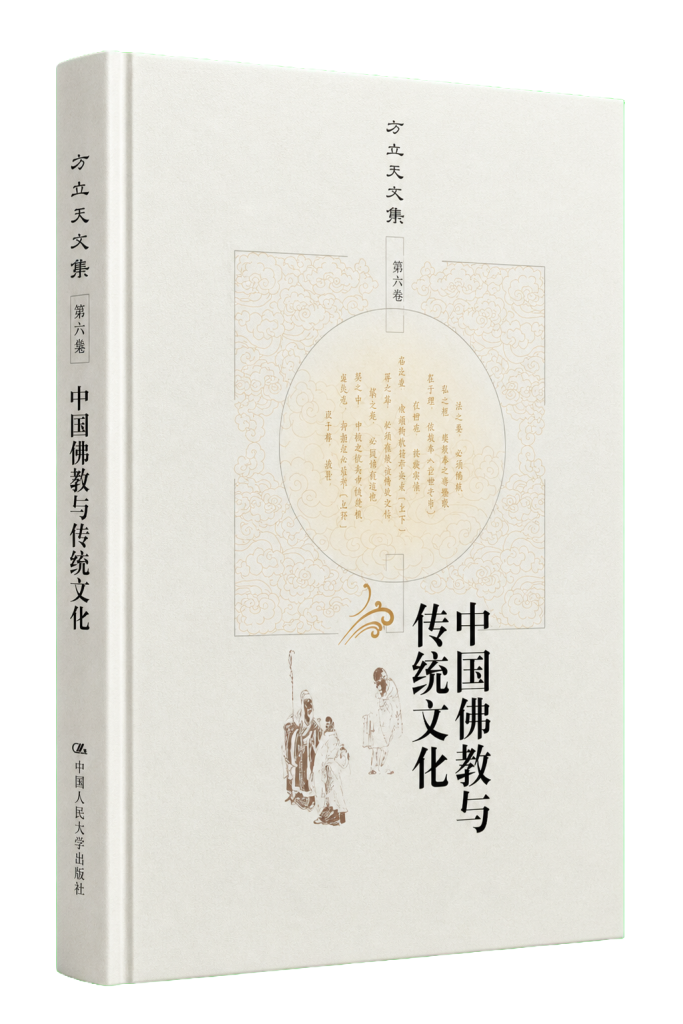
Since the first century CE, when Buddhism entered China from India, this foreign religion has both influenced and been influenced by traditional Chinese culture, eventually becoming an integral part of it. This profound historical process is not only a major theme for China but for all of East Asia. In Chinese Buddhism and Traditional Culture, Professor Litian Fang offers a systematic exploration of Buddhism as a cultural entity, examining its classics, doctrines, monastic system, and rituals. By tracing the religion’s development chronologically — from its introduction during the Han Dynasties (202 BCE–220 CE), through its flourishing in the Sixteen Kingdoms (c. 304–439 CE), to its gradual decline since the Five Dynasties (907–c. 960 CE) — the book provides a clear and comprehensive overview of Buddhism’s long journey on Chinese soil.
A key contribution of this work is its detailed analysis of how Buddhism became sinicized. The author highlights the crucial roles played by Buddhist schools of the Southern and Northern Dynasties (420–589 CE) and the Buddhist sects of the Sui and Tang Dynasties (581–907 CE) in this transformative process. Moreover, the book addresses the fascinating question of similarities and differences between Chinese Buddhism and its Indian counterpart. By comparing the two, Professor Fang illuminates the specific characteristics of Chinese Buddhist thought and culture — how indigenous Confucian and Daoist ideas reshaped Buddhist doctrines, and how, in turn, Buddhism enriched China’s philosophical and cultural landscape. The final chapter extends the discussion beyond China, examining the external influence of Chinese Buddhism across East Asia, including in Korea, Japan, and Vietnam.
This volume is an essential resource for scholars and students of Buddhism and Chinese cultural studies, particularly those in Buddhist countries. It will also appeal to any reader interested in religion, Chinese culture, and ancient Chinese history. Written with academic rigor yet accessible in style, Chinese Buddhism and Traditional Culture offers both a gateway for newcomers and deep insights for specialists, demonstrating how a foreign faith became a pillar of one of the world’s oldest continuous civilizations.
About the author
Professor Fang Litian is one of China’s most distinguished scholars of Buddhist philosophy. He serves as the director of the Institute for the Study of Buddhism and Religious Theory and a professor in the Department of Religious Studies at the School of Philosophy, Renmin University of China. Over his long and prolific career, he has held numerous leadership positions, including vice chairman and advisor of the Religious Society of China, standing vice‑chairman of the Society for History of Chinese Philosophy, editor‑in‑chief of the Journal of the History of Chinese Philosophy and the Journal of Religious Study, and member of the Social Science Commission of the Ministry of Education. He is also a librarian at the Central Research Institute of Culture and History. Professor Fang began publishing in 1964 and has since authored thirteen monographs and over 260 academic papers, in addition to co‑authoring sixteen other works. His scholarship is widely regarded as representing the very best of Chinese Buddhist philosophy after the 1980s.
Professor Fang’s contributions have received the highest national recognition. In 1986, his book Buddhist Philosophy won the first China Book Award (the coveted China Book Prize), and was considered one of the most popular Buddhist readings in China at the time. In 2003, his magnum opus, The Essentials of Chinese Buddhist Philosophy (two volumes), received the Sixth China National Book Award and was hailed as a new milestone in the study of Chinese Buddhist philosophy. Other major works include Treatise of Buddhism in Wei, Jin, Northern and Southern Dynasties and Chinese Buddhism and Traditional Culture. In The Essentials of Chinese Buddhist Philosophy, Professor Fang offers a systematic, in‑depth study of the philosophical dimensions of Chinese Buddhism, reflecting on cosmology, human life, and practical cultivation. Rooted in classical Chinese Buddhist writings and integrating Confucian and Daoist thought, this work has become an indispensable resource for scholars and students worldwide. For anyone seeking to understand the unique character and profound significance of Chinese Buddhist thought, Professor Fang Litian is an authoritative and inspiring guide.
About the translator
Amir Salehi Taleghani is a distinguished Iranian translator, researcher, and educator with an unusually broad and interdisciplinary academic background. He holds a Bachelor’s degree in Physics and Laboratory Sciences, as well as graduate degrees in English Language and Literature and Clinical Psychology. He is a member of the Iranian Psychology and Counseling Organization and the American Psychological Association (APA). His own academic research has focused on the AI-based diagnosis of schizophrenia — a pioneering intersection of clinical psychology and artificial intelligence. This unique combination of scientific, literary, and psychological expertise has made him exceptionally well-suited for translating complex works in the humanities, psychology, and interdisciplinary studies. Over the years, he has translated numerous scientific titles, several of which have received prestigious awards, including the Book of the Year award in Iran. The direct connection between his research in AI-driven psychiatric diagnosis and the subject matter of certain translations has turned his work into a uniquely specialized and insightful experience.
Born in Tehran in 1966 or 1967, Taleghani began his professional life as a teacher in Tehran schools, and it was there that he first identified the need for high-quality educational resources in Persian. His early career as an educator, combined with his scientific training, led him to select and translate books that would genuinely benefit young learners. Over decades, he has produced an exceptionally wide range of translated works — from multi-volume series on life skills, the human body, energy resources, and scientific experiments (with air, water, magnets, and light), to encyclopedias of science and space, and titles such as The Amazing World of Water, 1001 Scientific Questions and Answers for Children, and Where Does Rubbish Go? His translations have been published by Iran’s most respected educational publishers, including Mehrab Ghalam, Ofoq, Ghadyani, Navaye Madreseh, and Anjam Ketab. Beyond books, he has contributed to educational magazines like Roshd Danesh Amouz. While his name may not appear on individual award lists, the repeated collaboration of award-winning publishers speaks clearly to the quality and lasting value of his work. Amir Salehi Taleghani’s enduring legacy lies in his quiet, persistent effort to nurture scientific curiosity, critical thinking, and cross-disciplinary understanding among generations of Iranian readers.