A Way Toward Rural Revitalization and Sustainable Development Path
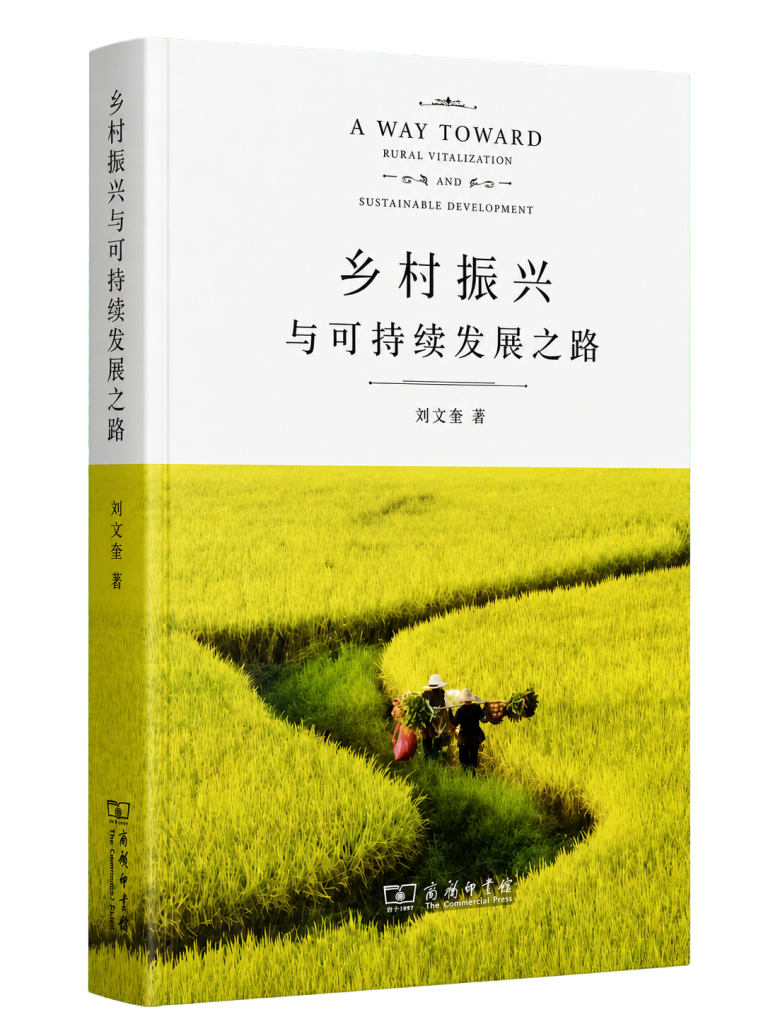
A Way Toward Rural Revitalization and Sustainable Development Path offers a firsthand, deeply practical account of poverty alleviation and sustainable rural development in China. The author, Wenkui Liu, has spent twenty years working with the China Foundation for Poverty Alleviation (CFPA), rooted in some of the country’s most impoverished villages. Through trial and error, he and his colleagues forged a market-oriented development model based on villagers’ cooperatives. The book is written in a fluent, engaging style, blending personal narrative with critical analysis, and provides clear answers to the most pressing problems facing rural areas today.
The book is structured around three major case studies. The first, from Daliangshan in Sichuan, reveals that simply pooling financial and material resources is insufficient to break the cycle of poverty. While such efforts brought visible changes, they failed to achieve sustainable development. The lesson: rural areas must develop industrial projects that participate in market competition, which requires transforming traditional smallholder production methods. The second case, from Minle Village in Gansu, builds on this insight. The CFPA introduced a cooperative-based, industry-oriented model, recognizing the value of modern enterprise systems and villagers’ cooperation. Although the industrial project ultimately failed, the experience highlighted the crucial role of village leaders in changing mindsets. The third case, from Ganda Village in Qinghai, demonstrates success: mobilizing capable local leaders to run market-oriented, cooperative-based industrial projects. Ganda transformed from a village too poor to afford yogurt into a prosperous community.
Since 2013, the CFPA has applied these lessons more widely. Two flagship initiatives emerged: the Baimei Village Homestay Project, which turns villagers’ old houses into rural boutique homestays for urban visitors, and the Shanpin Commune Project, which connects high-quality agricultural products directly with end consumers via e commerce platforms. The homestay project now operates in twenty villages, and the Shanpin Commune will reach one hundred villages by the end of the year. A Way Toward Rural Revitalization and Sustainable Development Path is an invaluable resource for practitioners and researchers alike, offering not only analysis but proven solutions for sustainable rural development.
An Outline of Chinese History
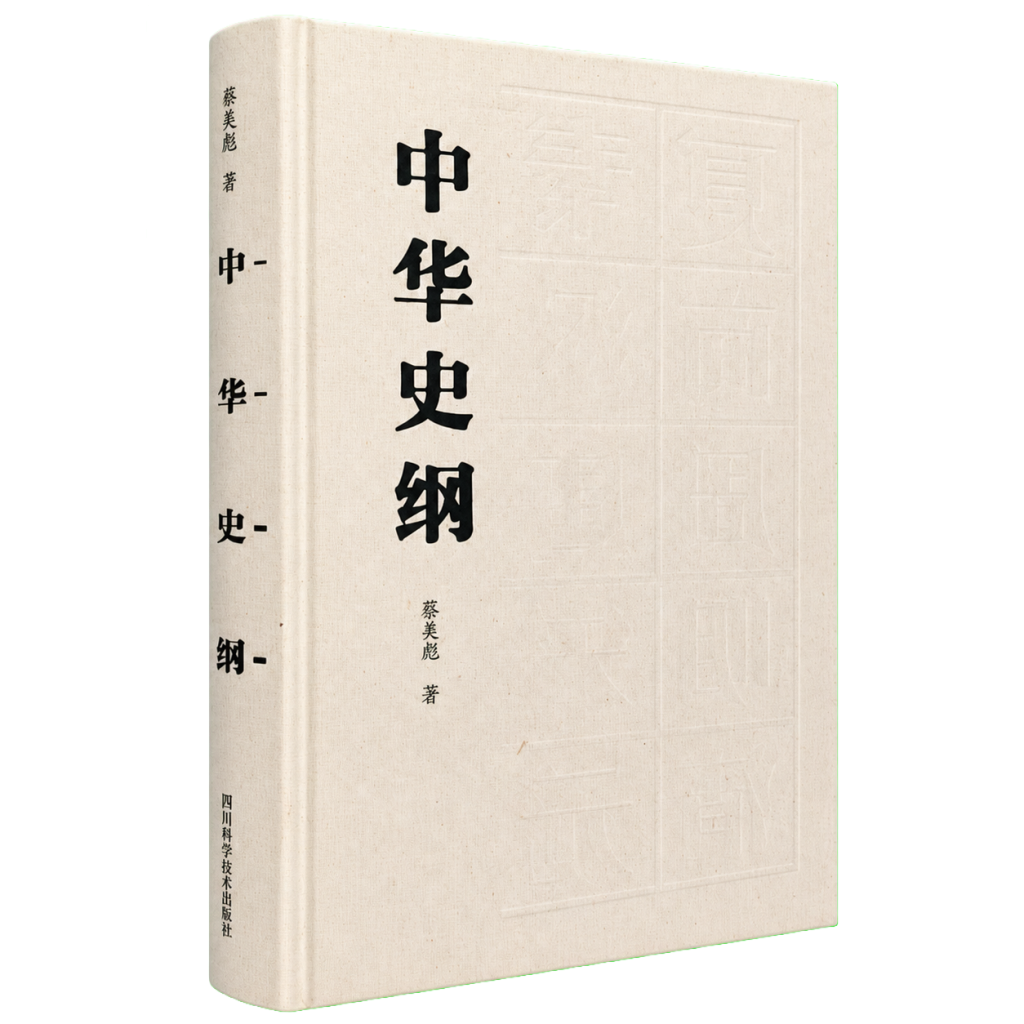
An Outline of Chinese History is a masterful condensation of the monumental twelve-volume General History of China, originally published by People’s Publishing House. The author, Cai Meibiao — honorary member of the Chinese Academy of Social Sciences and researcher at the Institute of Modern History — took on the task of creating this simplified edition at the request of central leaders who believed that the comprehensive multivolume work should be made accessible to the general public. The original General History of China is widely regarded as the most complete and systematic history of China produced in the past century. Its first four volumes were written by the renowned historian Fan Wenlan, and after Fan’s passing, Cai Meibiao presided over the completion of the remaining volumes. In this condensed version, Cai uses just 300,000 Chinese characters to outline the historical arc from primitive society to the fall of the Qing Dynasty. The result is a work that is detailed where it matters, concise in language, and truly reflective of a master historian’s craft — a rare, high level historical work intended for non specialist readers.
The book follows a strict general history format, covering every major dynasty — from the Qin, Han, Tang, Song, Yuan, Ming, and Qing, to the Wei, Jin, Southern and Northern Dynasties, and the Five Dynasties and Ten Kingdoms. Despite its brevity, it encapsulates five thousand years of Chinese history. Readers will learn, for example, when China implemented the provincial system and under what historical conditions Xinjiang and Taiwan were established as provinces. The book’s thematic focus is equally clear: it traces China’s transition from slavery to feudalism, the origins of imperial rule, the rise and fall of dynasties, and the lessons of state governance. Key concepts — such as the power usurpation by royal relatives, eunuchs misleading the state, “holding the emperor to command the princes,” the nine rank system, the clan system, and the imperial examination system — are all explained in detail. The book also highlights glorious eras: the Zhenguan reign of the Tang Dynasty, the technological inventions of the Song, Zheng He’s seven voyages to the West during the Ming Yongle period, and the Kangxi Qianlong prosperity of the Qing. At the same time, it does not shy away from describing periods of chaos, peasant uprisings, and the late Qing’s failure to respond to Western capitalist powers, which led to China becoming a semi colonial, semi feudal society.
A particular strength of this book is its attention to the formation of China as a multi ethnic unified country with the Han nationality as the main body. Cai Meibiao provides insightful analysis — for example, how the northern regimes during the Wei and Jin dynasties, though established by various ethnic groups, adopted the ancient Han state names to claim the cultural heritage of the Central Plains, thereby facilitating ethnic integration. By reading this book, audiences gain a clear understanding of how China’s multi ethnic unity evolved, including the roots of later ethnic autonomy policies. Furthermore, the book guides readers to appreciate the deep historical accumulation behind today’s China, fostering a sense of awe for history and respect for the ancestors who propelled progress. It is not only a historical overview but also an education in patriotism and a resource for those thinking about China’s development path, harmonious society, and socialist core values.
The Core Values of Chinese Civilization
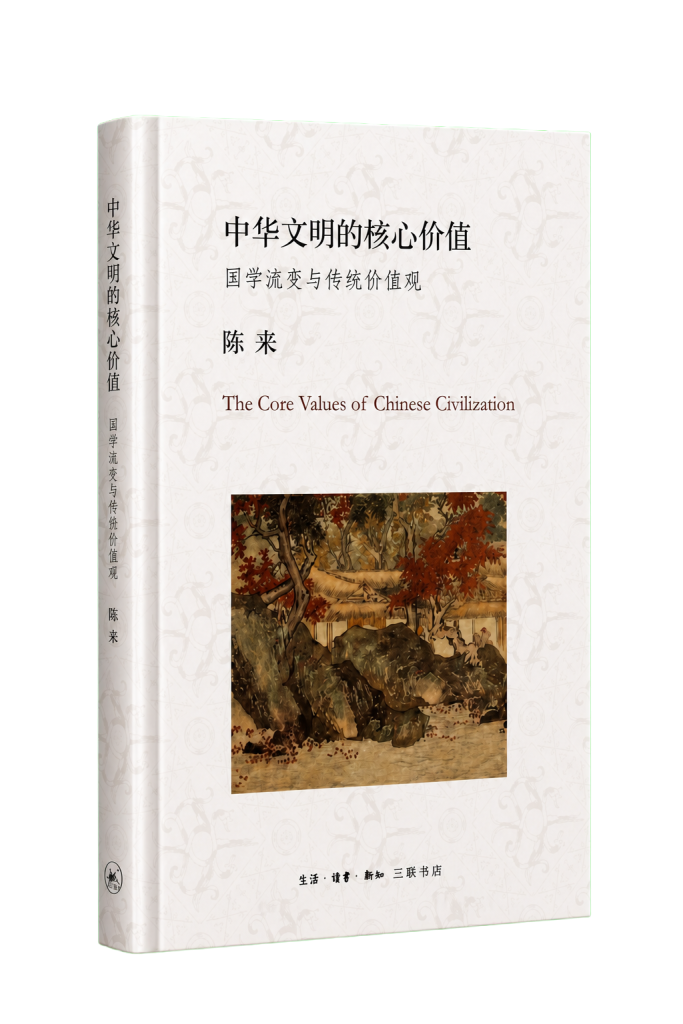
Drawing on the core values of Western civilization as a comparative lens, this book identifies and refines the corresponding core principles within Chinese civilization. The author distills them into four fundamental tenets: duty before freedom, obedience before rights, community before the individual, and harmony before conflict. Rooted in a deep engagement with guoxue — traditional Chinese Sinology — the work provides a detailed explanation of China’s classical value system, offering readers a structured understanding of how these principles have shaped Chinese thought and society across centuries.
While modern scholars have extensively discussed the concept of guoxue, their efforts have largely focused on compiling and cataloging an extremely rich and diverse body of information. Missing, however, has been a systematic theoretical analysis of the concepts and theories underlying guoxue. This book fills that gap by developing a rigorous theoretical framework in three important respects. First, it analyzes the mindset of guoxue, examining the dominant ideas and values of the historical period in which the term emerged. Particular attention is paid to the connection between guoxue and early social and cultural transformations, distinguishing three key phases of its development. Unlike past scholars who primarily defined guoxue by its range of studied objects, this book emphasizes guoxue as a modern body of research with its own evolving logic.
Second, the book assesses several phases in the modern evolution of guoxue research, tracing its journey from the beginning to the end of the twentieth century — culminating in the later phase of the National Heritage movement. Third, it explores the various main modes of modern guoxue, demonstrating how these modes correspond step by step with the evolutionary phases of guoxue research. By providing both historical depth and theoretical clarity, The Core Values of Chinese Civilization offers an essential resource for anyone seeking to understand the philosophical and cultural foundations of contemporary Chinese civilization.
The World is the Reflection of the Mind

In an age of relentless anxiety and spiritual disorientation, this book arrives as a much-needed dialogue between classical Chinese wisdom and the restless modern soul. Xue Mo, a celebrated Chinese writer and a practitioner of Tibetan Buddhist Mahamudra tradition, presents a series of profound yet accessible reflections on how our inner world shapes the reality we experience. Rather than offering temporary comfort or abstract theories, The World Is a Reflection of the Mind cuts through illusions and directly touches the reader’s true heart. It reveals a liberating truth: none of the problems we encounter originate from others — they are rooted in our own minds. By changing the mind, we can change our actions, and by changing our actions, we can transform our very destiny.
The book can be viewed as a series of “yoga lessons for the mind” — practical, wisdom-based exercises for handling all sorts of life situations. Through simple, unpretentious language and vivid anecdotes drawn from years of observing life and cultivating inner awareness, Xue Mo guides readers toward self-mastery. He teaches that the world appearing before our eyes is nothing but a reflection of our own mind. To see this clearly is to become a master player in the game of existence; to master one’s own mind is to become the sovereign of one’s inner world. The book’s power lies in its ability to reach beyond intellectual understanding and initiate genuine inner transformation. It is neither a “chicken soup for the soul” nor a volume of theoretical jargon, but a vital handbook for authentic spiritual cultivation.
This landmark edition presents the original Chinese text alongside a masterful English translation by J. C. Cleary, a renowned American sinologist and Harvard-educated translator of classics such as The Art of War and The Flower Adornment Sutra. The bilingual format allows readers to appreciate the beauty of Xue Mo’s original prose while benefiting from Cleary’s precise and elegant rendering. First published in English in 2018 by Encyclopedia of China Publishing House, and now issued in a bilingual edition by Zhonghua International Media Publishing Group, the book has received international acclaim. Readers in fields as diverse as medicine and education have found in it a source of profound insight and practical guidance. For anyone seeking deeper meaning, inner peace, and a clearer understanding of the relationship between mind and world, The World Is a Reflection of the Mind is an indispensable companion.