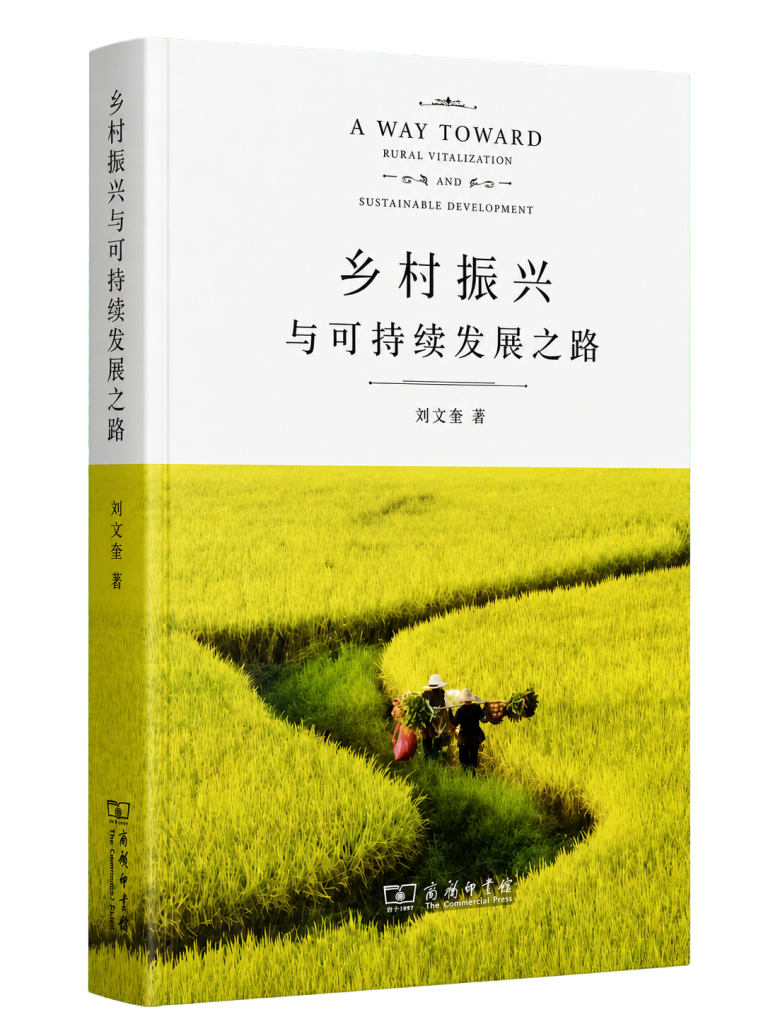
About the book
A Way Toward Rural Revitalization and Sustainable Development Path offers a firsthand, deeply practical account of poverty alleviation and sustainable rural development in China. The author, Wenkui Liu, has spent twenty years working with the China Foundation for Poverty Alleviation (CFPA), rooted in some of the country’s most impoverished villages. Through trial and error, he and his colleagues forged a market-oriented development model based on villagers’ cooperatives. The book is written in a fluent, engaging style, blending personal narrative with critical analysis, and provides clear answers to the most pressing problems facing rural areas today.
The book is structured around three major case studies. The first, from Daliangshan in Sichuan, reveals that simply pooling financial and material resources is insufficient to break the cycle of poverty. While such efforts brought visible changes, they failed to achieve sustainable development. The lesson: rural areas must develop industrial projects that participate in market competition, which requires transforming traditional smallholder production methods. The second case, from Minle Village in Gansu, builds on this insight. The CFPA introduced a cooperative-based, industry-oriented model, recognizing the value of modern enterprise systems and villagers’ cooperation. Although the industrial project ultimately failed, the experience highlighted the crucial role of village leaders in changing mindsets. The third case, from Ganda Village in Qinghai, demonstrates success: mobilizing capable local leaders to run market-oriented, cooperative-based industrial projects. Ganda transformed from a village too poor to afford yogurt into a prosperous community.
Since 2013, the CFPA has applied these lessons more widely. Two flagship initiatives emerged: the Baimei Village Homestay Project, which turns villagers’ old houses into rural boutique homestays for urban visitors, and the Shanpin Commune Project, which connects high-quality agricultural products directly with end consumers via e commerce platforms. The homestay project now operates in twenty villages, and the Shanpin Commune will reach one hundred villages by the end of the year. A Way Toward Rural Revitalization and Sustainable Development Path is an invaluable resource for practitioners and researchers alike, offering not only analysis but proven solutions for sustainable rural development.
About the author
Liu Wenkui is the Vice Chairman and Secretary General of the China Foundation for Poverty Alleviation (CFPA), one of China’s most influential non‑profit organizations dedicated to rural development. He joined the CFPA in 2000 and became its Secretary General in 2012. Over the past two decades, Liu has been at the forefront of China’s battle against rural poverty. He has led major disaster relief and post‑earthquake reconstruction efforts following the devastating Wenchuan, Yushu, and Ya’an earthquakes. More importantly, he has designed and implemented some of China’s most innovative poverty alleviation programs, including the “Good Samaritans,” “Dingliangzhu,” “Child Companion Mom,” “Baimei Village Homestay,” “Shanpin Commune,” and “Living Water Plan.” Under his leadership, the CFPA also established an industry‑leading mechanism for preserving and increasing the value of public welfare assets, and participated in founding Zhonghe Rural Credit Cooperative — at the time, the largest social enterprise in China.
For twenty years, Liu Wenkui has remained deeply rooted in China’s poorest villages. Through continuous trial and error, he has successfully developed a rural sustainable development model that is both market‑oriented and based on genuine villager cooperation. His hands‑on experience and thoughtful analysis of farmer cooperatives, industrial poverty alleviation, and social enterprises are the foundation of his book A Way Toward Rural Revitalization and Sustainable Development Path. In this work, Liu shares the real‑life stories of Daliangshan in Sichuan, Minle Village in Gansu, and Ganda Village in Qinghai — case studies that reveal both the failures and successes on the path to sustainable rural development. Liu’s unique perspective as both a practitioner and a thinker makes him a vital voice in understanding how China is reshaping its rural future.
About the translator