IRAN Against Demonization
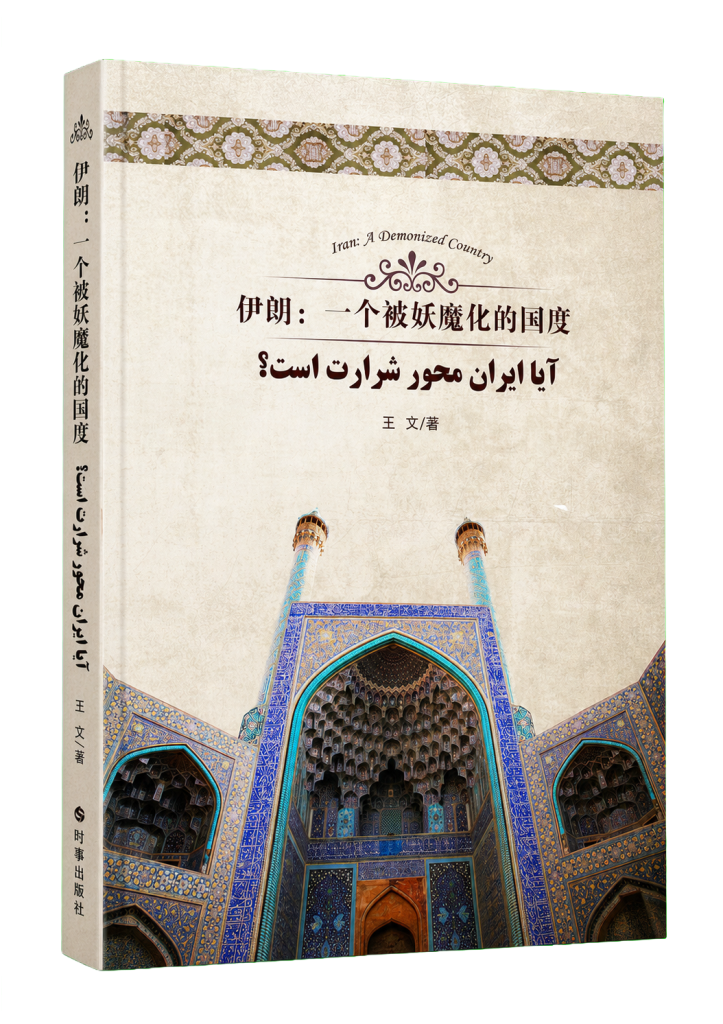
In this remarkable travelogue cum political analysis, Wang Wen — Executive Dean of the Chongyang Institute for Financial Studies at Renmin University of China — takes the reader on an intimate journey into the heart of contemporary Iran. Written in the wake of the 2012 “Arab Spring” and escalating Western sanctions, the book challenges the one dimensional, often hostile portrayal of Iran in mainstream Western media. Wang, a distinguished Chinese scholar and former editor of the Global Times, draws on his firsthand observations during a visit to Tehran and Isfahan. He asks a simple yet provocative question: Is Iran truly the “axis of evil” as depicted by Washington, or is it a complex, proud, and deeply dignified nation that has been systematically demonized?
The book unfolds as a series of twelve vivid essays, each peeling back a layer of misconception. Wang begins with his own introspections on the flight to Tehran, confessing his initial nervousness — a reflection of how even educated Chinese have internalized Western narratives about Iran’s “dangerousness.” But upon arrival, he encounters a startlingly different reality: fashionable, friendly women who happily pose for photos; a society that is simultaneously devout and “quietly passionate”; a political system where President Ahmadinejad stands unprotected before millions, far more accessible than any Western leader. Wang explores the paradox of Iranian life — the chador covering colorful attire, the absence of nightclubs yet the presence of romance on every corner — and concludes that Iran is neither a terrorist haven nor a chaotic failed state, but a nation where “dignity” trumps material comfort.
What makes this book particularly valuable is Wang’s insistence on providing three alternative perspectives: the Iranian view of itself as a free, democratic, and dignified Islamic power; the global view of Iran as an emerging “axial civilization” resisting Western hegemony; and the Chinese strategic view of Iran as an indispensable energy partner and geopolitical counterweight. Wang argues that Iran serves as a “concave and convex mirror” for China — reflecting both China’s achievements and its own compromises. Written with the fluency of a journalist and the rigor of a policy analyst, Iran: A Demonized Country is essential reading for anyone seeking to understand the real Iran beyond the headlines, and for those who wish to reflect on how global power narratives shape our perceptions of entire nations.
Hayat Apartmanı

Hayat Apartmanı is a warm and heart lifting story of friendship, sharing, and the unexpected magic of community life. Through the wide eyed gaze of a young boy named Mehmet, we are welcomed into an old apartment building in Istanbul where every floor holds a different world. There is Muhammet, who dreams of football glory; Sinan, a quiet chess master; Necla Nine and Hayri Dede, who have a century of memories between them; and Caroline Teyze, who has an uncanny talent for choosing the perfect gift. Their stories intertwine in small, quiet moments — a shared meal, a whispered secret, a helping hand — showing that a real neighbourhood is less a collection of flats and more an extended family. But when a mysterious new neighbour moves into the sixth floor, Mehmet’s chance encounter sets in motion a chain of surprises that will change not only his own life, but the story of the whole apartment.
Written by Özge Lokmanhekim and illustrated by Başak İşbilir, Hayat Apartmanı was published by Fom Kitap in January 2025. The story draws deeply on the author’s own childhood years in Istanbul and her time living in the historic Simotas Building in Kuzguncuk, where neighbourly bonds and small scale kindnesses shaped her own understanding of what it means to belong. In an age of digital isolation, where urban life often thins the ties between people, Lokmanhekim’s tale is a gentle reminder of how much we still need one another — for empathy, for support, for the simple joy of being part of something larger than ourselves. The book weaves together the old and the new, blending local Turkish flavours with universal values of tolerance and cooperation.
At its heart, Hayat Apartmanı celebrates diversity as a quiet treasure. Every character carries habits, viewpoints and life stories that are uniquely their own, yet it is precisely these differences that make the community richer. Young readers are gently encouraged to observe, to question, and to put themselves in another’s shoes — learning that disagreements are not obstacles but opportunities for growth. With lively illustrations and a tender narrative voice, this 32 page picture book is ideally suited for children aged 6–8. It is a perfect choice for parents and educators seeking to nurture emotional intelligence and social awareness through a story that is as entertaining as it is nourishing.
Bostan Korkuluğu
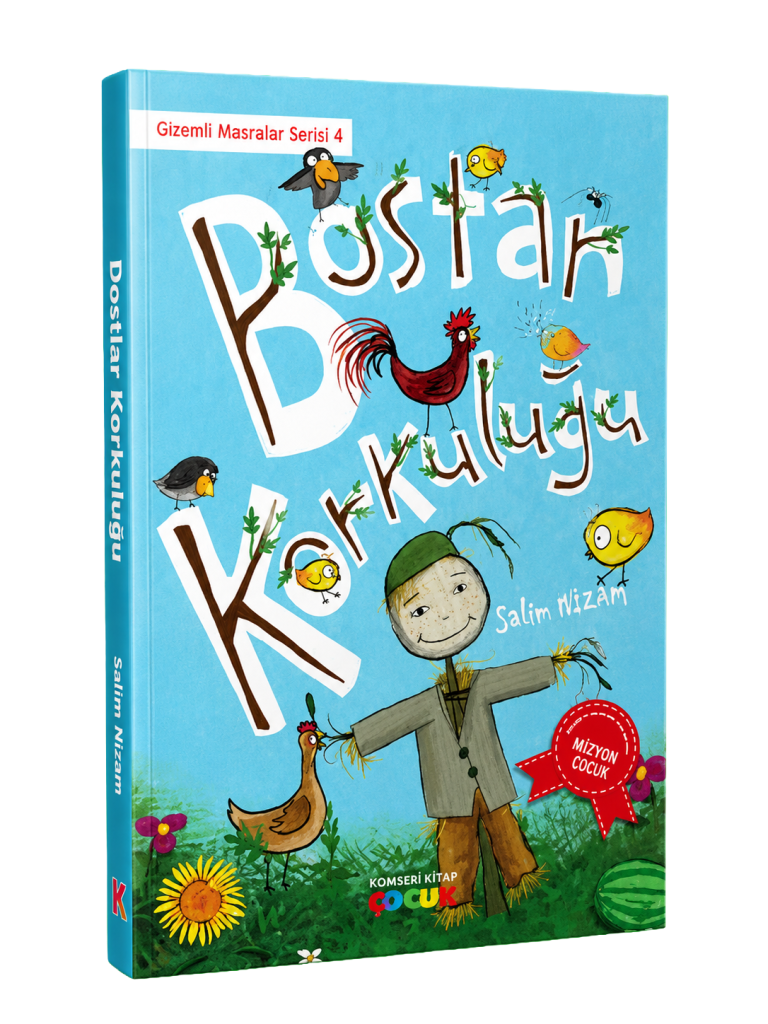
From the heart of contemporary Turkish literature comes Bostan Korkuluğu (The Scarecrow), a delightful and wise children’s book by the award-winning Turkish author and poet Salim Nizam. Known in his homeland as the “new Ömer Seyfettin” for his masterful storytelling, Nizam brings his characteristic warmth, intelligence, and deep understanding of rural life to this enchanting tale. The story follows the brave and clever scarecrow tasked with protecting the fields, who one day spots three suspicious men wandering around his village. What begins as a simple duty soon unfolds into an engaging adventure, teaching young readers timeless lessons about courage, vigilance, and the quiet heroism found in everyday life.
Nizam draws richly from his own childhood in the village of Paşaçiftlik in Gönen, Balıkesir, where he was born in 1970. The son of a storyteller mother and a father who sang folk songs, he grew up listening to the tales and traditions that would later fill his award-winning stories. A graduate of Turkish Language Teaching and Turkish Language and Literature, Nizam has won numerous national literary awards, including first prize in the prestigious Ömer Seyfettin Story Competition for his work Köy Saatçisi (The Village Watchmaker). His novel Ben Gönen’de Doğdum (I Was Born in Gönen) was selected as the Best Novel of the Year at the 2022 ESKADER Culture and Art Awards. With Bostan Korkuluğu, part of his “Gizemli Maceralar Serisi” (Mysterious Adventures Series), he brings his signature blend of mystery, morality, and Anatolian charm to young readers.
Published by Semerkand Çocuk Yayınları, this 72-page Turkish-language edition is ideally suited for children aged 6 to 8. Its accessible prose, brisk pacing, and gentle suspense make it a perfect introduction to literary reading. More than just a mystery, Bostan Korkuluğu is a celebration of responsibility, community, and the courage to act when something seems amiss. It is an ideal choice for parents and educators seeking to enrich a child’s library with a story that is both entertaining and morally nourishing, offering a window into the timeless storytelling traditions of Turkey.
China’s Leadership in Global Governance
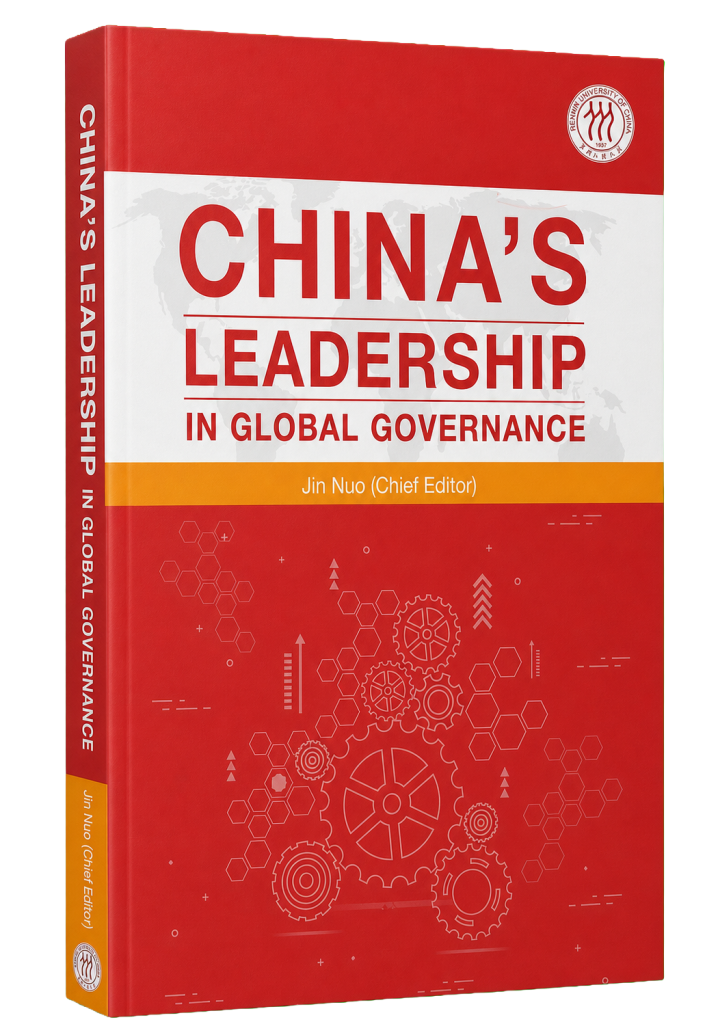
“The world is so big, and the problems are so many. The international community expects to hear China’s voice and see China’s solutions. China cannot be absent.” This powerful statement opens a groundbreaking work that systematically examines China’s growing role in global governance. Edited by Professor Jin Nuo, Party Secretary of Renmin University of China, the book brings together more than ten distinguished experts from the fields of international relations, economics, law, and political science — including renowned scholars such as Pang Zhongying, Jin Canrong, Yang Guangbin, Chen Yue, and Wang Yiwei. Together, they provide a comprehensive and authoritative analysis of why China’s participation in global governance is not only necessary but indispensable.
The book is divided into two complementary parts. The first half lays the theoretical groundwork: it explores the logical starting points of global governance, analyzes what the world expects from China, examines the domestic foundations that enable China to act, and clarifies China’s evolving role on the global stage. The second half shifts from theory to practice, focusing on China’s concrete explorations in global governance. It delves into China’s sentiments, philosophical underpinnings, major propositions, key initiatives, specific plans, and practical attempts to address transnational challenges — from climate change and economic inequality to peacekeeping and pandemic response. The authors offer a panoramic assessment of current developments and future prospects, answering clearly and forcefully the central question: “Why can China not be absent from global governance?”
Written with academic rigor yet accessible to a broad audience, China’s Leadership in Global Governance provides both a theoretical framework and a practical roadmap for understanding China’s responsible role in shaping a more just and effective international order. It is an essential read for policymakers, scholars, students of international affairs, and anyone interested in the future of global cooperation and the rise of China as a key global actor.
The Dream Chasers: Selected Poems about Education

Zhu Yongxin is one of China’s most influential education thinkers. As the founder of the “New Education Experiment” movement — which has been adopted by over 1,500 schools across China — he has dedicated his life to restoring the richness and completeness of human nature through schooling. A distinguished professor at Soochow University, a former deputy mayor of Suzhou, and the current Vice Chairman of the 14th National Committee of the Chinese People’s Political Consultative Conference (CPPCC), Zhu Yongxin is also a prolific writer whose works have been translated into more than 28 languages, including English, Japanese, and Korean. This bilingual edition, Chasing Dreams, offers English-speaking readers an intimate and inspiring window into the heart of Zhu’s educational philosophy.
What makes this collection unique is its format. The book gathers over one hundred prefaces and postscripts written by Zhu Yongxin for other authors — friends, students, and fellow educators — over several decades. These are not detached academic essays; rather, they are spontaneous, heartfelt texts often written at the request of a friend or publisher, or simply because Zhu was deeply moved by someone’s work or character. Within these short pieces, the reader discovers a wide array of themes: the importance of children’s literature, the artistry of teaching, the power of reading, and the urgent need to reform China’s examination system. Each preface or postscript is a gem of warmth, sincerity, and intellectual clarity.
A central thread running through the collection is Zhu’s core belief that the purpose of education is to help both teachers and students lead “a happy and complete life”. In an age where education is increasingly reduced to test scores, competition, and economic utility, this book is a powerful reminder of education’s deeper, more human dimension. The Poetics of Education is essential reading for anyone — educators, policymakers, parents, and students alike — who seeks to understand the soul of modern educational reform in China and the vision of one of its most passionate and influential advocates.
The Liangzhu Kingdom of 5,000 Years

This remarkable book takes young readers on a vivid journey back 5,000 years to the ancient Kingdom of Liangzhu, a civilization that represents the dawn of Chinese culture. Written by renowned archaeologist Liu Bin, the lead discoverer of the Liangzhu archaeological site, this beautifully illustrated children’s book unlocks the mysteries of a UNESCO World Heritage site. Through a unique focus on three core elements—water, city, and jade—it reveals the everyday life, remarkable engineering, and spiritual world of the Liangzhu people, from the world’s earliest known dam system to China’s unique “Jade Age.”
Co-authored by Liu Bin, a leading archaeologist and director of the Zhejiang Provincial Institute of Cultural Relics and Archaeology, and Yu Jingjing, a former Xinhua News Agency journalist with extensive experience covering major archaeological discoveries, this book bridges the gap between rigorous scholarship and engaging storytelling. It is an authoritative yet wonderfully accessible introduction to one of the world’s oldest civilizations, brought to life with stunning illustrations by Zeng Qiqi that blend traditional Chinese ink painting with modern animation.
In July 2019, the Archaeological Ruins of Liangzhu City were inscribed on the UNESCO World Heritage List as testimony to the existence of a Chinese civilization at least 5,000 years ago. This book captures that significance for a young audience, helping them understand not just the facts of the past, but the wonder of discovery. It is a perfect resource for parents and educators seeking to inspire curiosity about history, archaeology, and the rich tapestry of China’s cultural heritage.
The History and Appreciation of Chinese Dances

The History and Appreciation of Chinese Dances is a comprehensive textbook on the general history of Chinese dance, designed specifically for university students and graduate majors in dance. The book is organized into fourteen chapters. Each chapter begins with a thorough exposition of historical theories and knowledge, followed by a dedicated “Appreciation of Works” section. These sections provide brief critical reviews of contemporary dance works that relate to the historical content of the chapter, effectively bridging the gap between ancient dance history and modern dance practice while stimulating the reader’s imagination. At the end of each chapter, “Thought and Exercise” questions help instructors highlight key points and assist students in mastering the most important and challenging material.
To emphasize the professional character of dance as an art form, the book includes over three hundred carefully selected dance images, making the content more vivid and intuitive. Covering dance from ancient times through successive dynasties to the present day, the text respects established academic conclusions while appropriately incorporating new theoretical insights. For example, the book delves into the dance traditions of the Yellow Emperor’s tribal confederation, including the famous Cloud Gate Great Scroll (Yunmen Dajuan), also known as Cheng Yun or Xianchi. This dance was the first piece in the “Six Dances” of the early Zhou dynasty, created to praise the Yellow Emperor’s achievements — his creation of all things, uniting of the people, and virtue as abundant as clouds. The book traces the origins of such dances as totemic rituals, drawing on legends from classical texts such as Zhuangzi and Han Feizi, and even links them to later military music and the Chiyou Dance (a horned dance still reflected in the silver bull horn ornaments of Miao women today). Archaeological materials — pottery and rock paintings — are also examined, with appreciations of notable works such as the Dance Pattern Painted Pottery Basin, the Huashan Rock Paintings in Guangxi, and the grand musical Luoyue Shenyun.
This textbook is an indispensable resource for students, teachers, and researchers of Chinese dance, as well as for anyone interested in the intersection of performing arts, archaeology, and ancient Chinese culture. By connecting legendary origins, ritual practices, and contemporary choreography, The History and Appreciation of Chinese Dances offers a holistic and deeply engaging journey through China’s rich and continuous dance heritage.