Ritual, Music and Cultural Traditions in China
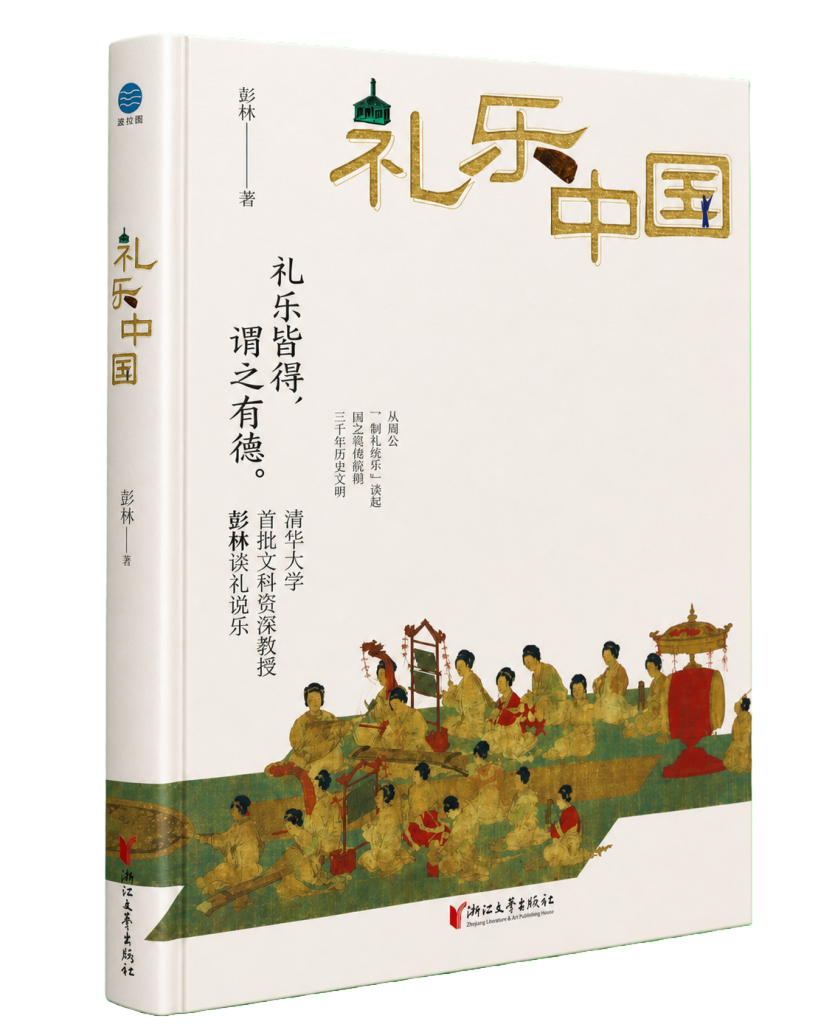
At the heart of this book lies a fundamental question: can Chinese civilization offer a distinct model of cultural development for the modern world? Professor Peng Lin, a distinguished historian from Tsinghua University, believes that the answer lies in understanding China’s ancient yet enduring “Li-Yue” (Ritual and Music) civilization. This work distills his decades of research, exploring the profound cultural implications and surprising practical relevance of “Li” (rituals) — the very core of Chinese civilization. Far from being merely rigid formalities or feudal remnants, rituals, as the book reveals, are the living framework that has shaped Chinese ethics, social order, and collective ethos for millennia.
Professor Peng masterfully connects ancient theories with contemporary concerns through clear language and vivid examples. He argues that true cultural confidence in the 21st century comes from a deep-rooted understanding of one’s own traditions. The book elaborates on concepts like the transformative power of music (Yue) in moral cultivation and the importance of ritual in fostering social harmony. More than a historical study, this volume serves as a vital key for anyone wishing to understand not just the “how,” but the “why” behind China’s unique cultural DNA. It is an essential read for scholars of Sinology, students of comparative philosophy, and all who seek to grasp the foundational values driving one of the world’s oldest continuous civilizations.
A Study of Mohist Logic

This landmark work by Professor Yang Wujin of Renmin University of China provides a definitive, systematic study of Mohist logic — one of the three major sources of ancient logic worldwide, alongside Aristotelian logic and Indian Hetu-vidya (In logic). For over a century, the existence and legitimacy of a native Chinese logical tradition have been fiercely debated. Professor Yang, a leading philosopher and distinguished logician, confronts this debate head on. He meticulously examines the historical and cultural origins of Mohist logic, fully affirming the foundational classical texts and their philosophical interpretations. This book refutes the once prevalent view that China had no logical tradition, demonstrating instead that the Mohist school, founded by the philosopher Mozi in the 5th century BCE, developed a sophisticated and highly relevant system of reasoning rooted in the very essence of language and argumentation.
Professor Yang achieves this through a brilliant two tiered analysis. At the object-language level, he reveals Mohist logic as a form of “argumentation logic,” which closely resembles the non formal logic and critical thinking now highly valued in the West. At the meta theoretical level, he uncovers its underlying theories and principles of formal logic, using modern logical tools to unlock its timeless wisdom. The book shows how Mohist logicians systematically studied concepts, propositions, inference patterns, and paradoxes — long before similar work emerged elsewhere. By bridging ancient Chinese thought with contemporary logical frameworks, Yang Wujin demonstrates not only the legitimacy but also the profound modernity of Mohist logic. Praised by scholars for its fresh linguistic perspective, this volume is an essential resource for anyone interested in comparative philosophy, the history of logic, and the rich intellectual heritage of pre Qin China.