About the book
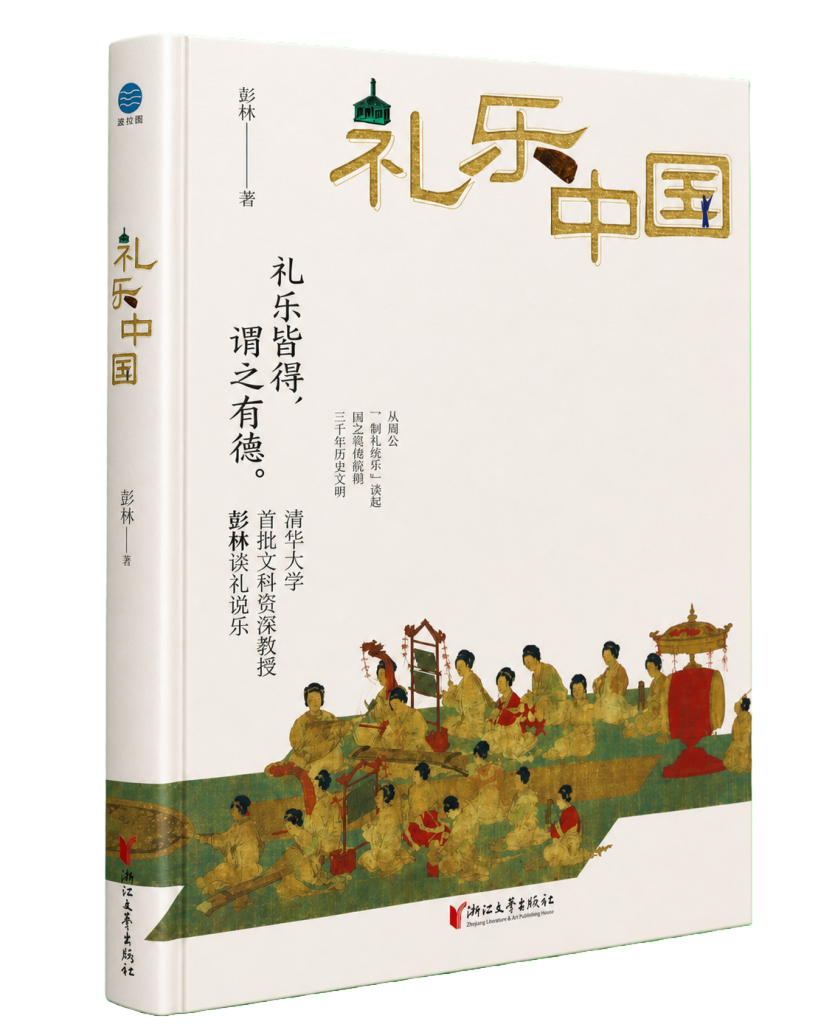
At the heart of this book lies a fundamental question: can Chinese civilization offer a distinct model of cultural development for the modern world? Professor Peng Lin, a distinguished historian from Tsinghua University, believes that the answer lies in understanding China's ancient yet enduring "Li-Yue" (Ritual and Music) civilization. This work distills his decades of research, exploring the profound cultural implications and surprising practical relevance of "Li" (rituals) — the very core of Chinese civilization. Far from being merely rigid formalities or feudal remnants, rituals, as the book reveals, are the living framework that has shaped Chinese ethics, social order, and collective ethos for millennia.
Professor Peng masterfully connects ancient theories with contemporary concerns through clear language and vivid examples. He argues that true cultural confidence in the 21st century comes from a deep-rooted understanding of one's own traditions. The book elaborates on concepts like the transformative power of music (Yue) in moral cultivation and the importance of ritual in fostering social harmony. More than a historical study, this volume serves as a vital key for anyone wishing to understand not just the "how," but the "why" behind China's unique cultural DNA. It is an essential read for scholars of Sinology, students of comparative philosophy, and all who seek to grasp the foundational values driving one of the world's oldest continuous civilizations.
About the author
Peng Lin is a professor and doctoral supervisor in the Department of History at Tsinghua University, one of China’s most prestigious institutions. He serves as the director of the Center for Chinese Ritual Studies and holds the title of one of Tsinghua’s first senior professors in the liberal arts. For decades, Professor Peng has dedicated himself to the teaching and research of ancient Chinese history, intellectual history, and above all, the classical Confucian ritual and music culture — the very core of traditional Chinese civilization. His academic credentials extend widely: he is a member of the Expert Committee of the Center for Ancient Civilization Studies at the Chinese Academy of Social Sciences, a director of the Chinese Yanhuang Culture Research Association, and the chief expert of the Expert Committee of the Huaxia Culture Exchange Promotion Association. He has also held visiting professorships at Kyoto University, City University of Hong Kong, National Chung Cheng University, Sungkyunkwan University in South Korea, and the French Humanities House, among others. Professor Peng has authored numerous influential works, including A Study on the Juche Thought and the Date of the Book’s Completion in the Book of Zhouli, The Spread of Chinese Ritual Studies in Ancient Korea, An Outline of Chinese Traditional Etiquette, Fifteen Lectures on Cultural Relics and Cultural China, and Introduction to the Study of the Three Rites, in addition to publishing over one hundred academic papers.
Professor Peng’s teaching has earned him national acclaim. Two of his courses at Tsinghua University — “Cultural Relics and Cultural China” and “Chinese Ancient Etiquette and Civilization” — have been rated as National Excellent Courses. He has received numerous awards, including the second prize of National Teaching Achievements, the Baosteel Outstanding Teacher Award, the first prize of Beijing Outstanding Teaching Achievement Award, the Beijing Higher Education Teaching Master Award, and the Beijing Higher Education Teacher Moral Model. At Tsinghua, he was honored as one of the first “Top Ten Teachers” and received the “Good Teacher and Helpful Friend” Special Award, as well as the “Gong Yuzhi Teaching Scholarship.” In his book Ritual, Music and Ethos of Culture in Ancient China, Professor Peng distills thirty years of research into an accessible yet profound exploration of how ancient Chinese rituals shaped the ethical and cultural DNA of the nation. His lectures are legendary — students have described them as “life‑changing.” For anyone seeking to understand the deep roots of Chinese civilization, Professor Peng Lin is an indispensable guide.
About the translator