IRAN Against Demonization
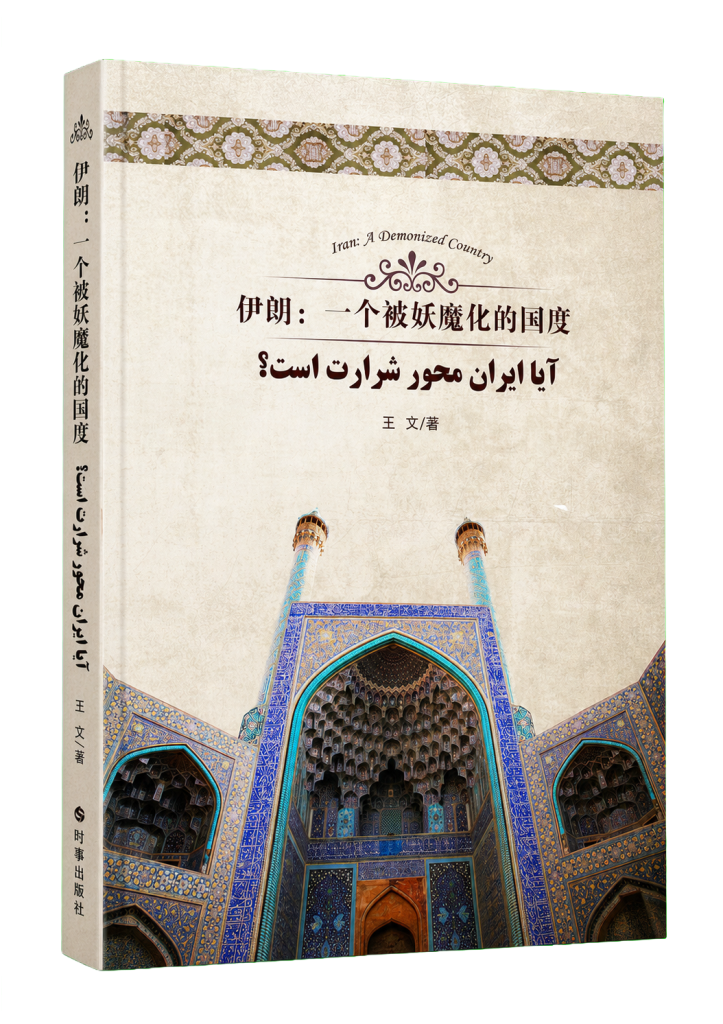
In this remarkable travelogue cum political analysis, Wang Wen — Executive Dean of the Chongyang Institute for Financial Studies at Renmin University of China — takes the reader on an intimate journey into the heart of contemporary Iran. Written in the wake of the 2012 “Arab Spring” and escalating Western sanctions, the book challenges the one dimensional, often hostile portrayal of Iran in mainstream Western media. Wang, a distinguished Chinese scholar and former editor of the Global Times, draws on his firsthand observations during a visit to Tehran and Isfahan. He asks a simple yet provocative question: Is Iran truly the “axis of evil” as depicted by Washington, or is it a complex, proud, and deeply dignified nation that has been systematically demonized?
The book unfolds as a series of twelve vivid essays, each peeling back a layer of misconception. Wang begins with his own introspections on the flight to Tehran, confessing his initial nervousness — a reflection of how even educated Chinese have internalized Western narratives about Iran’s “dangerousness.” But upon arrival, he encounters a startlingly different reality: fashionable, friendly women who happily pose for photos; a society that is simultaneously devout and “quietly passionate”; a political system where President Ahmadinejad stands unprotected before millions, far more accessible than any Western leader. Wang explores the paradox of Iranian life — the chador covering colorful attire, the absence of nightclubs yet the presence of romance on every corner — and concludes that Iran is neither a terrorist haven nor a chaotic failed state, but a nation where “dignity” trumps material comfort.
What makes this book particularly valuable is Wang’s insistence on providing three alternative perspectives: the Iranian view of itself as a free, democratic, and dignified Islamic power; the global view of Iran as an emerging “axial civilization” resisting Western hegemony; and the Chinese strategic view of Iran as an indispensable energy partner and geopolitical counterweight. Wang argues that Iran serves as a “concave and convex mirror” for China — reflecting both China’s achievements and its own compromises. Written with the fluency of a journalist and the rigor of a policy analyst, Iran: A Demonized Country is essential reading for anyone seeking to understand the real Iran beyond the headlines, and for those who wish to reflect on how global power narratives shape our perceptions of entire nations.
Historical Materialism and Contemporary China
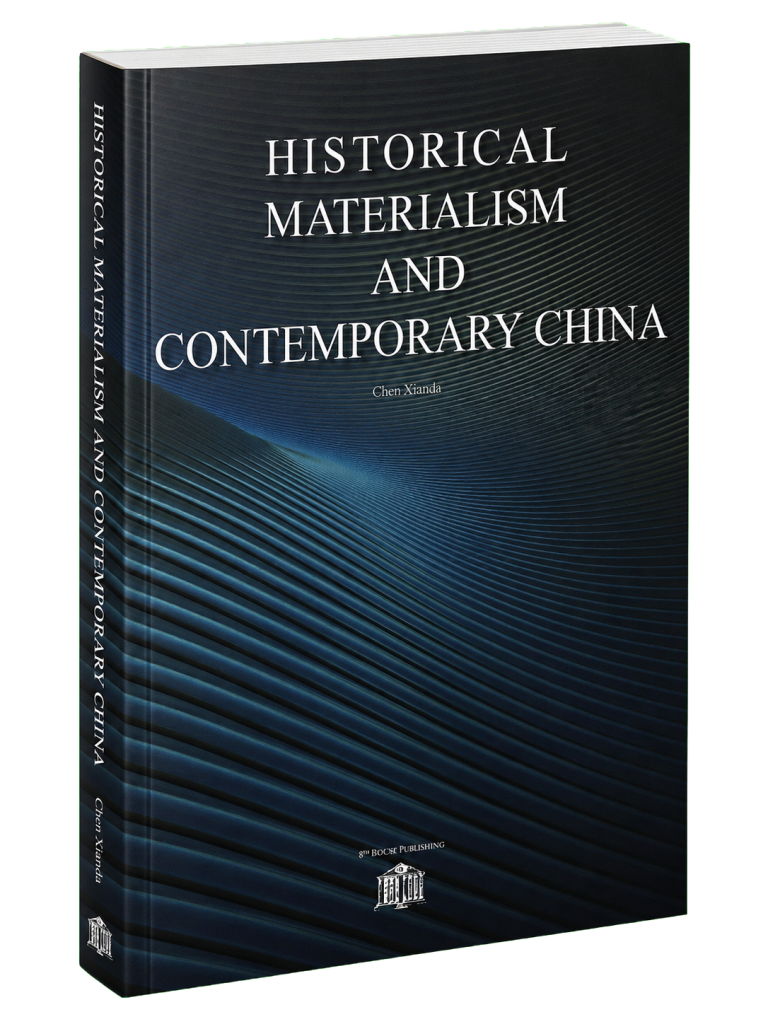
Chen Xianda, an Honorary Professor at Renmin University of China and one of the country’s most distinguished Marxist philosophers, has been a towering figure in the field for decades. As the former President of the Chinese Historical Materialism Society and recipient of the prestigious Wu Zhang Humanities and Social Sciences Lifetime Achievement Award, his intellectual authority is undisputed. In Historical Materialism and Contemporary China, a key volume in the “Marxist Theory and Contemporary China” series, he presents a powerful argument for the enduring relevance of historical materialism. The book offers a brilliant refutation of both Confucian restorationism and the wholesale rejection of China’s own past, demonstrating instead that Marxism’s success in China stemmed from its profound ability to absorb the best of the nation’s cultural heritage. In turn, this encounter breathed new life into millennia old Chinese traditions.
Structured into three core sections, the work is a masterclass in theoretical and practical wisdom. The first section establishes the essence and function of historical materialism, clarifying its relationship with dialectical materialism and tackling the complex interplay between economic determinism and human agency. The second section focuses on the “Chinese Road,” analyzing the dialectics of a century of change, the lessons of socialist practice, and the meaning of the Chinese path and Chinese solution. The final section delves into culture and conviction, exploring the integration of Marxism with traditional Chinese culture, the historical cycle of dynasties and China’s socialist path, and the critical contemporary issue of cultural confidence.
More than a mere theoretical study, this book is an indispensable tool for understanding the philosophical logic that underpins China’s modern governance and cultural renaissance. It speaks directly to scholars of Sinology, students of political philosophy, and policymakers, as well as any keen observer of global affairs trying to decipher the worldview driving contemporary China. Rigorous yet accessible, Historical Materialism and Contemporary China is a timely and vital contribution to one of the defining dialogues of our era: how ancient civilizations can absorb and transform modern ideologies to forge a unique path of development.
China’s Leadership in Global Governance
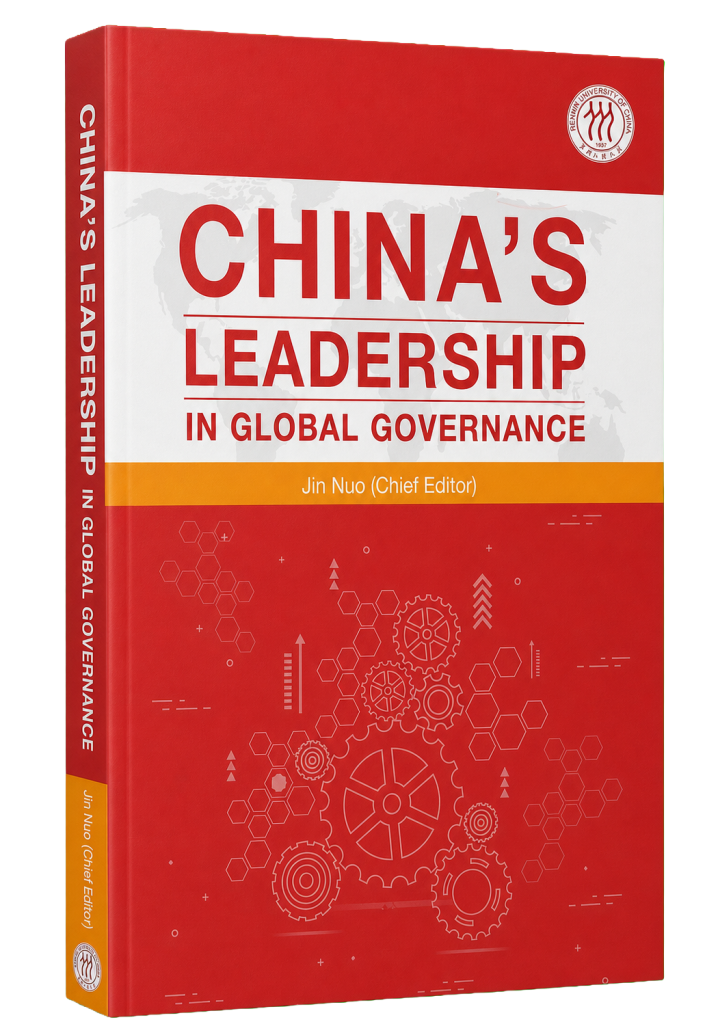
“The world is so big, and the problems are so many. The international community expects to hear China’s voice and see China’s solutions. China cannot be absent.” This powerful statement opens a groundbreaking work that systematically examines China’s growing role in global governance. Edited by Professor Jin Nuo, Party Secretary of Renmin University of China, the book brings together more than ten distinguished experts from the fields of international relations, economics, law, and political science — including renowned scholars such as Pang Zhongying, Jin Canrong, Yang Guangbin, Chen Yue, and Wang Yiwei. Together, they provide a comprehensive and authoritative analysis of why China’s participation in global governance is not only necessary but indispensable.
The book is divided into two complementary parts. The first half lays the theoretical groundwork: it explores the logical starting points of global governance, analyzes what the world expects from China, examines the domestic foundations that enable China to act, and clarifies China’s evolving role on the global stage. The second half shifts from theory to practice, focusing on China’s concrete explorations in global governance. It delves into China’s sentiments, philosophical underpinnings, major propositions, key initiatives, specific plans, and practical attempts to address transnational challenges — from climate change and economic inequality to peacekeeping and pandemic response. The authors offer a panoramic assessment of current developments and future prospects, answering clearly and forcefully the central question: “Why can China not be absent from global governance?”
Written with academic rigor yet accessible to a broad audience, China’s Leadership in Global Governance provides both a theoretical framework and a practical roadmap for understanding China’s responsible role in shaping a more just and effective international order. It is an essential read for policymakers, scholars, students of international affairs, and anyone interested in the future of global cooperation and the rise of China as a key global actor.