Historical Materialism and Contemporary China
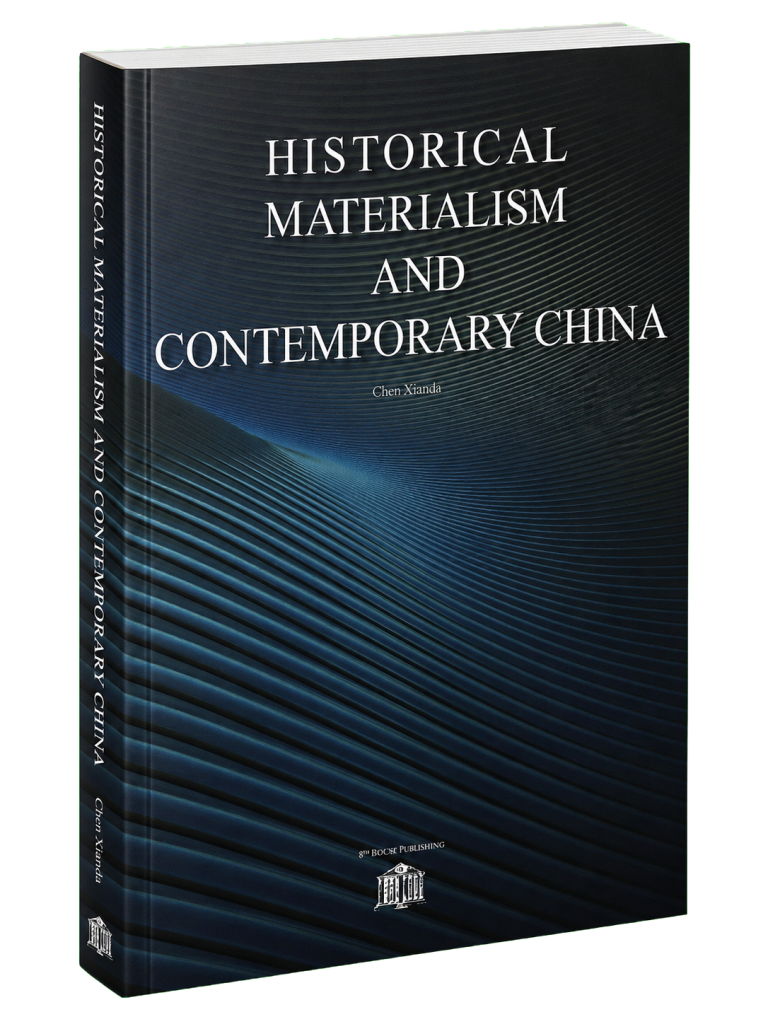
Chen Xianda, an Honorary Professor at Renmin University of China and one of the country’s most distinguished Marxist philosophers, has been a towering figure in the field for decades. As the former President of the Chinese Historical Materialism Society and recipient of the prestigious Wu Zhang Humanities and Social Sciences Lifetime Achievement Award, his intellectual authority is undisputed. In Historical Materialism and Contemporary China, a key volume in the “Marxist Theory and Contemporary China” series, he presents a powerful argument for the enduring relevance of historical materialism. The book offers a brilliant refutation of both Confucian restorationism and the wholesale rejection of China’s own past, demonstrating instead that Marxism’s success in China stemmed from its profound ability to absorb the best of the nation’s cultural heritage. In turn, this encounter breathed new life into millennia old Chinese traditions.
Structured into three core sections, the work is a masterclass in theoretical and practical wisdom. The first section establishes the essence and function of historical materialism, clarifying its relationship with dialectical materialism and tackling the complex interplay between economic determinism and human agency. The second section focuses on the “Chinese Road,” analyzing the dialectics of a century of change, the lessons of socialist practice, and the meaning of the Chinese path and Chinese solution. The final section delves into culture and conviction, exploring the integration of Marxism with traditional Chinese culture, the historical cycle of dynasties and China’s socialist path, and the critical contemporary issue of cultural confidence.
More than a mere theoretical study, this book is an indispensable tool for understanding the philosophical logic that underpins China’s modern governance and cultural renaissance. It speaks directly to scholars of Sinology, students of political philosophy, and policymakers, as well as any keen observer of global affairs trying to decipher the worldview driving contemporary China. Rigorous yet accessible, Historical Materialism and Contemporary China is a timely and vital contribution to one of the defining dialogues of our era: how ancient civilizations can absorb and transform modern ideologies to forge a unique path of development.
Ritual, Music and Cultural Traditions in China
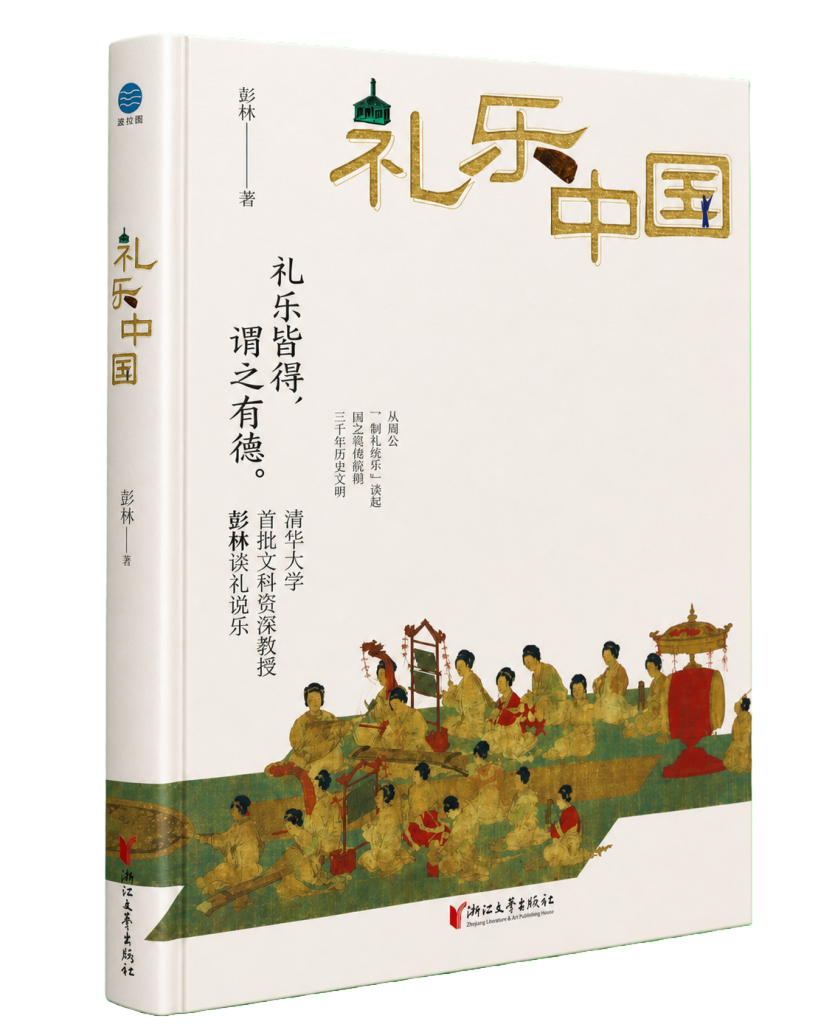
At the heart of this book lies a fundamental question: can Chinese civilization offer a distinct model of cultural development for the modern world? Professor Peng Lin, a distinguished historian from Tsinghua University, believes that the answer lies in understanding China’s ancient yet enduring “Li-Yue” (Ritual and Music) civilization. This work distills his decades of research, exploring the profound cultural implications and surprising practical relevance of “Li” (rituals) — the very core of Chinese civilization. Far from being merely rigid formalities or feudal remnants, rituals, as the book reveals, are the living framework that has shaped Chinese ethics, social order, and collective ethos for millennia.
Professor Peng masterfully connects ancient theories with contemporary concerns through clear language and vivid examples. He argues that true cultural confidence in the 21st century comes from a deep-rooted understanding of one’s own traditions. The book elaborates on concepts like the transformative power of music (Yue) in moral cultivation and the importance of ritual in fostering social harmony. More than a historical study, this volume serves as a vital key for anyone wishing to understand not just the “how,” but the “why” behind China’s unique cultural DNA. It is an essential read for scholars of Sinology, students of comparative philosophy, and all who seek to grasp the foundational values driving one of the world’s oldest continuous civilizations.
Chinese Buddhism and Traditional Culture
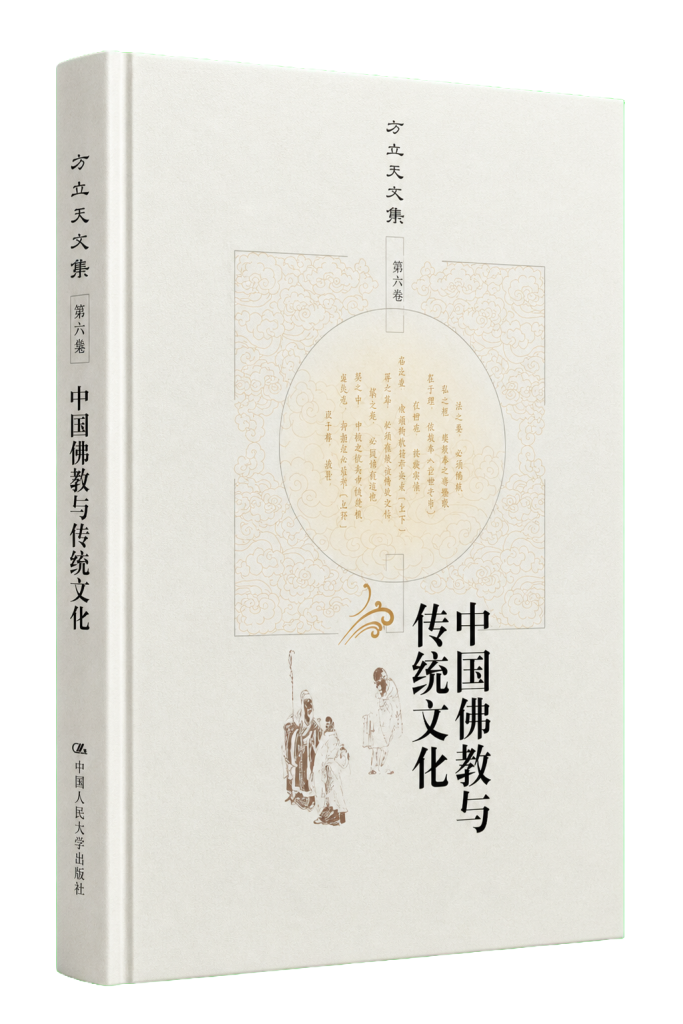
Since the first century CE, when Buddhism entered China from India, this foreign religion has both influenced and been influenced by traditional Chinese culture, eventually becoming an integral part of it. This profound historical process is not only a major theme for China but for all of East Asia. In Chinese Buddhism and Traditional Culture, Professor Litian Fang offers a systematic exploration of Buddhism as a cultural entity, examining its classics, doctrines, monastic system, and rituals. By tracing the religion’s development chronologically — from its introduction during the Han Dynasties (202 BCE–220 CE), through its flourishing in the Sixteen Kingdoms (c. 304–439 CE), to its gradual decline since the Five Dynasties (907–c. 960 CE) — the book provides a clear and comprehensive overview of Buddhism’s long journey on Chinese soil.
A key contribution of this work is its detailed analysis of how Buddhism became sinicized. The author highlights the crucial roles played by Buddhist schools of the Southern and Northern Dynasties (420–589 CE) and the Buddhist sects of the Sui and Tang Dynasties (581–907 CE) in this transformative process. Moreover, the book addresses the fascinating question of similarities and differences between Chinese Buddhism and its Indian counterpart. By comparing the two, Professor Fang illuminates the specific characteristics of Chinese Buddhist thought and culture — how indigenous Confucian and Daoist ideas reshaped Buddhist doctrines, and how, in turn, Buddhism enriched China’s philosophical and cultural landscape. The final chapter extends the discussion beyond China, examining the external influence of Chinese Buddhism across East Asia, including in Korea, Japan, and Vietnam.
This volume is an essential resource for scholars and students of Buddhism and Chinese cultural studies, particularly those in Buddhist countries. It will also appeal to any reader interested in religion, Chinese culture, and ancient Chinese history. Written with academic rigor yet accessible in style, Chinese Buddhism and Traditional Culture offers both a gateway for newcomers and deep insights for specialists, demonstrating how a foreign faith became a pillar of one of the world’s oldest continuous civilizations.
A Study of Mohist Logic

This landmark work by Professor Yang Wujin of Renmin University of China provides a definitive, systematic study of Mohist logic — one of the three major sources of ancient logic worldwide, alongside Aristotelian logic and Indian Hetu-vidya (In logic). For over a century, the existence and legitimacy of a native Chinese logical tradition have been fiercely debated. Professor Yang, a leading philosopher and distinguished logician, confronts this debate head on. He meticulously examines the historical and cultural origins of Mohist logic, fully affirming the foundational classical texts and their philosophical interpretations. This book refutes the once prevalent view that China had no logical tradition, demonstrating instead that the Mohist school, founded by the philosopher Mozi in the 5th century BCE, developed a sophisticated and highly relevant system of reasoning rooted in the very essence of language and argumentation.
Professor Yang achieves this through a brilliant two tiered analysis. At the object-language level, he reveals Mohist logic as a form of “argumentation logic,” which closely resembles the non formal logic and critical thinking now highly valued in the West. At the meta theoretical level, he uncovers its underlying theories and principles of formal logic, using modern logical tools to unlock its timeless wisdom. The book shows how Mohist logicians systematically studied concepts, propositions, inference patterns, and paradoxes — long before similar work emerged elsewhere. By bridging ancient Chinese thought with contemporary logical frameworks, Yang Wujin demonstrates not only the legitimacy but also the profound modernity of Mohist logic. Praised by scholars for its fresh linguistic perspective, this volume is an essential resource for anyone interested in comparative philosophy, the history of logic, and the rich intellectual heritage of pre Qin China.