About the book
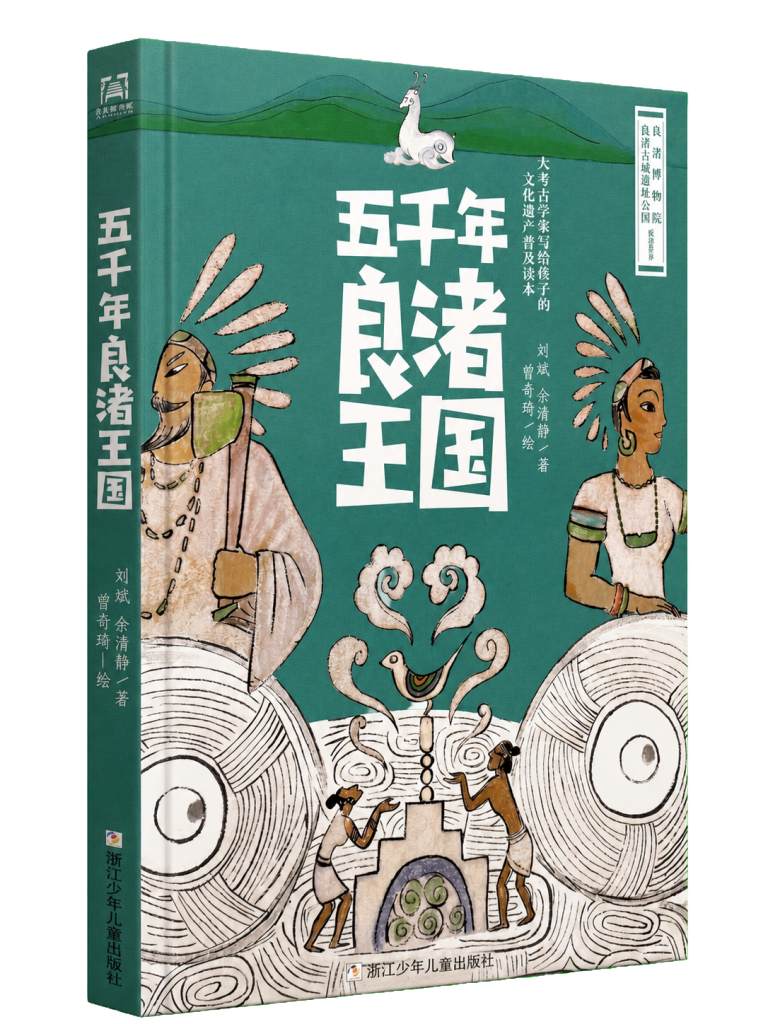
This remarkable book takes young readers on a vivid journey back 5,000 years to the ancient Kingdom of Liangzhu, a civilization that represents the dawn of Chinese culture. Written by renowned archaeologist Liu Bin, the lead discoverer of the Liangzhu archaeological site, this beautifully illustrated children’s book unlocks the mysteries of a UNESCO World Heritage site. Through a unique focus on three core elements—water, city, and jade—it reveals the everyday life, remarkable engineering, and spiritual world of the Liangzhu people, from the world’s earliest known dam system to China’s unique “Jade Age.”
Co-authored by Liu Bin, a leading archaeologist and director of the Zhejiang Provincial Institute of Cultural Relics and Archaeology, and Yu Jingjing, a former Xinhua News Agency journalist with extensive experience covering major archaeological discoveries, this book bridges the gap between rigorous scholarship and engaging storytelling. It is an authoritative yet wonderfully accessible introduction to one of the world's oldest civilizations, brought to life with stunning illustrations by Zeng Qiqi that blend traditional Chinese ink painting with modern animation.
In July 2019, the Archaeological Ruins of Liangzhu City were inscribed on the UNESCO World Heritage List as testimony to the existence of a Chinese civilization at least 5,000 years ago. This book captures that significance for a young audience, helping them understand not just the facts of the past, but the wonder of discovery. It is a perfect resource for parents and educators seeking to inspire curiosity about history, archaeology, and the rich tapestry of China's cultural heritage.
About the author
Liu Bin
Professor Liu Bin is one of China’s most distinguished archaeologists, best known as the discoverer of the ancient city of Liangzhu – a discovery that fundamentally reshaped our understanding of Chinese civilisation. Born in 1961, he graduated from the Archaeology Department of Jilin University in 1985 and joined the Zhejiang Provincial Institute of Cultural Relics and Archaeology, where he served as director from 2015 onward. He is currently a professor and doctoral supervisor at Zhejiang University’s School of Art and Archaeology, director of the university’s Cultural Heritage Institute, and director of the Zhejiang University Museum of Art and Archaeology. Liu has received numerous honours, including the “National Leading Talent in Culture and Publicity”, “National Leading Talent in the Ten Thousand Talent Plan”, and “National Advanced Worker”. His most celebrated achievement came in 2006–2007, when he led a coring survey that uncovered the Liangzhu city walls, proving the existence of a large, sophisticated state society in China more than five thousand years ago – a discovery that later helped secure UNESCO World Heritage status for the Liangzhu Archaeological Ruins in 2019. Over nearly four decades, Liu has directed or taken part in excavations at most of Liangzhu’s major sites: Fanshan, Yaoshan, the city walls, the outer city, the water management system, and the high‑dam area. He has published more than seventy academic papers and major works such as Comprehensive Research Report on the Ancient City of Liangzhu and Searching for the Lost Civilisation: Notes on the Archaeological Excavations of Liangzhu. In his widely praised children’s book, The Liangzhu Kingdom of 5,000 Years (co‑authored with Yu Jingjing), Liu brings his unparalleled first‑hand knowledge of the Liangzhu excavation site to young readers. Using clear, vivid prose and a focus on water, city, and jade, he introduces them to one of the world’s oldest civilisations – its remarkable engineering, its sophisticated society, and the profound cultural significance of Liangzhu jade. For anyone wanting to understand the dawn of Chinese civilisation, Liu Bin is the essential guide.
Yu Jingjing
Yu Jingjing is a former Xinhua News Agency journalist with extensive experience covering China’s major archaeological discoveries. She has long focused on cultural and educational topics, and between 2006 and 2007 she was directly involved in reporting the discovery of the Liangzhu ancient city, as well as the 2016 discovery of the large‑scale Liangzhu water conservancy project. After leaving Xinhua, Yu Jingjing became CEO of YouWen Technology, where she uses big‑data tools to help scholars and journalists build professional “data profiles” of their capabilities. Her deep interest in making China’s ancient heritage accessible to the general public led her to collaborate with the celebrated archaeologist Liu Bin on The Liangzhu Kingdom of 5,000 Years. In this beautifully illustrated children’s book – first published in Chinese as The 5,000‑Year‑Old Liangzhu Kingdom – Yu Jingjing’s journalistic clarity and ability to tell a compelling story help translate complex archaeological research into language that young readers can easily understand. Together with Liu Bin, she brings to life the Liangzhu people’s daily existence, their ingenious water‑management systems, their awe‑inspiring jade culture, and their social and political organisation. Thanks to her contribution, The Liangzhu Kingdom of 5,000 Years is not only a work of rigorous scholarship but also an engaging, visually stunning introduction to China’s 5,000‑year‑old civilisation for children and general readers alike.
About the translator