About the book
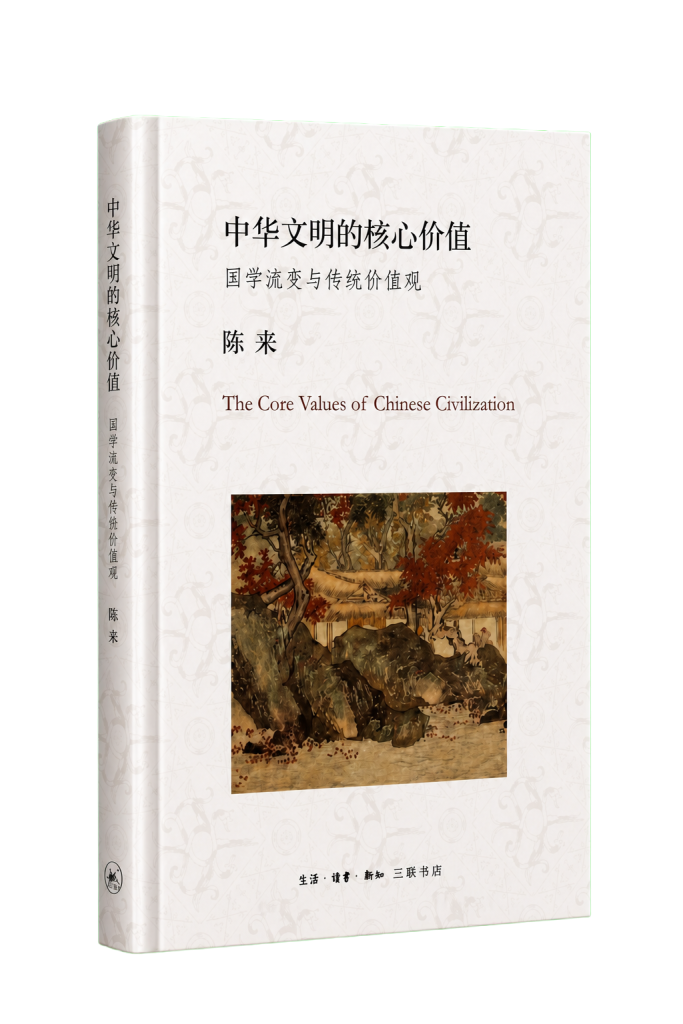
Drawing on the core values of Western civilization as a comparative lens, this book identifies and refines the corresponding core principles within Chinese civilization. The author distills them into four fundamental tenets: duty before freedom, obedience before rights, community before the individual, and harmony before conflict. Rooted in a deep engagement with guoxue — traditional Chinese Sinology — the work provides a detailed explanation of China’s classical value system, offering readers a structured understanding of how these principles have shaped Chinese thought and society across centuries.
While modern scholars have extensively discussed the concept of guoxue, their efforts have largely focused on compiling and cataloging an extremely rich and diverse body of information. Missing, however, has been a systematic theoretical analysis of the concepts and theories underlying guoxue. This book fills that gap by developing a rigorous theoretical framework in three important respects. First, it analyzes the mindset of guoxue, examining the dominant ideas and values of the historical period in which the term emerged. Particular attention is paid to the connection between guoxue and early social and cultural transformations, distinguishing three key phases of its development. Unlike past scholars who primarily defined guoxue by its range of studied objects, this book emphasizes guoxue as a modern body of research with its own evolving logic.
Second, the book assesses several phases in the modern evolution of guoxue research, tracing its journey from the beginning to the end of the twentieth century — culminating in the later phase of the National Heritage movement. Third, it explores the various main modes of modern guoxue, demonstrating how these modes correspond step by step with the evolutionary phases of guoxue research. By providing both historical depth and theoretical clarity, The Core Values of Chinese Civilization offers an essential resource for anyone seeking to understand the philosophical and cultural foundations of contemporary Chinese civilization.
About the author
Professor Chen Lai is widely recognized as one of China’s foremost masters of philosophy. He serves as a professor and doctoral supervisor in the Department of Philosophy at Tsinghua University and as the Dean of the Tsinghua Academy of Chinese Learning (Guoxue). Born in Beijing in 1952, Chen Lai originally studied geology at what is now Central South University, graduating in 1976. He then pursued his passion for philosophy at Peking University, earning his master’s degree in 1981 and his doctorate in 1985 under the guidance of two legendary figures: Zhang Dainian and Feng Youlan. Before joining Tsinghua, he taught at Peking University for twenty‑eight years, rising from lecturer (1981) to associate professor (1986) and full professor (1990). He also chaired the Teaching and Research Office of Chinese Philosophy and directed the Research Centre for Confucianism at Peking University. Professor Chen has held visiting positions at Harvard University, the University of Tokyo, Kansai University, the Chinese University of Hong Kong, Academia Sinica in Taiwan, and other prestigious institutions.
Professor Chen is an extraordinarily prolific scholar, having published over twelve academic monographs. His major works include A Study of Zhuxi’s Philosophy (1987, 2000), Dating of Zhuzi’s Letters (1989), You Wu Zhi Jing: The Spirit of Wang Yangming’s Philosophy (1991), Ancient Religion and Ethics: The Roots of Confucianism (1996), The World of Ancient Thoughts and Culture (2002), Interpretation and Reconstruction: The Spirit of Wang Chuanshan’s Philosophy (2004), and Studies on Bamboo and Silk Versions of Wuxing and Other Newly Unearthed Confucian Texts (2009). In 2009, the Joint Publishing Beijing compiled and published the twelve‑volume “Academic Monographs of Chen Lai” series, a testament to his lasting influence. His research has made foundational contributions to Confucian philosophy, especially the thought of the Song‑Ming period. Beyond his publications, he serves as an honorary professor at eleven universities and sits on the editorial boards of sixteen academic journals. For anyone seeking to understand the depth and evolution of Chinese Confucianism — from its classical roots to its contemporary interpretations — Chen Lai’s work, particularly Ancient Religion and Ethics, offers an indispensable gateway.
About the translator